Wednesday, 18 June 2025

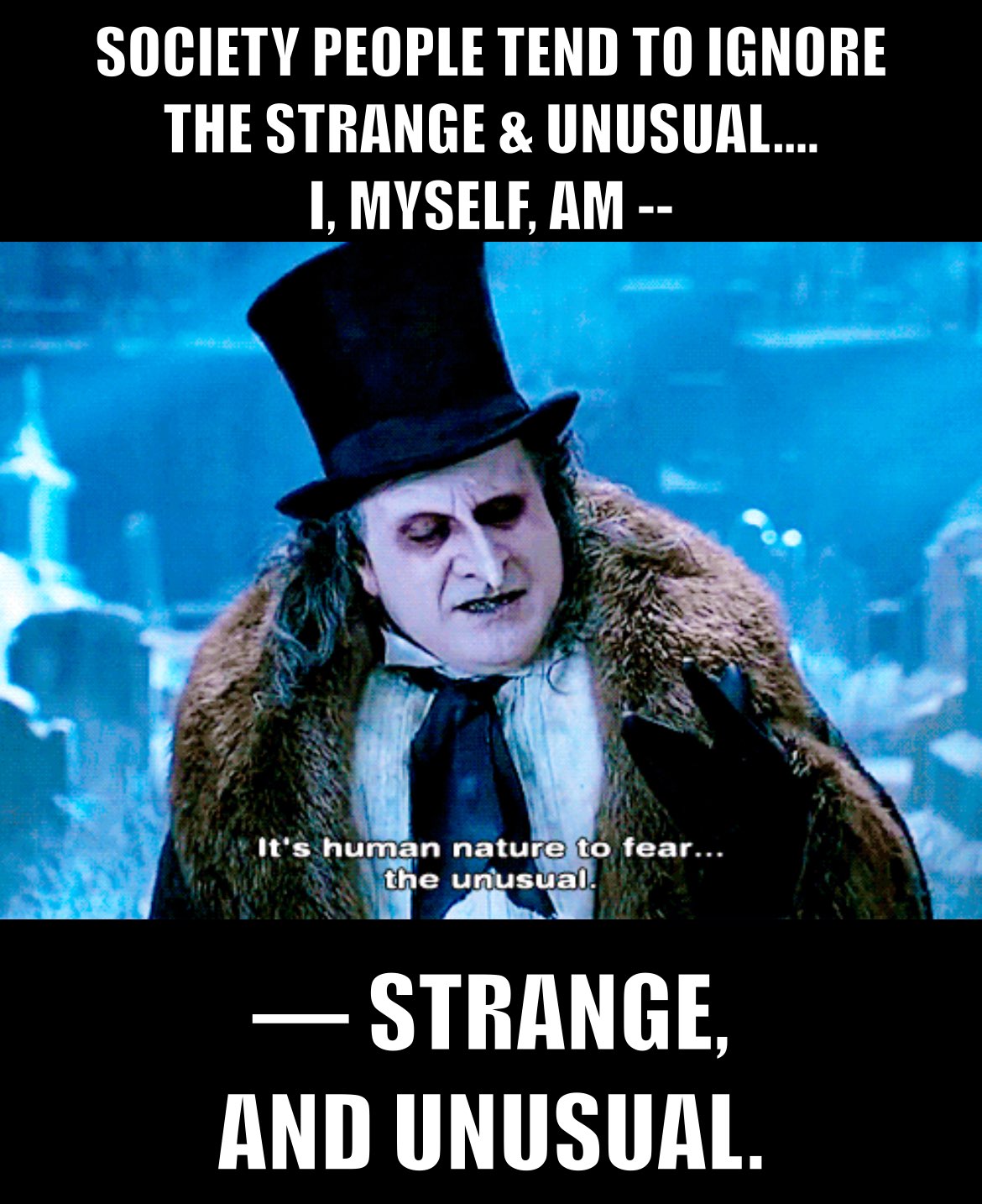
Overwrought, Incoherent and Too Much


10a (w/ an epigraph) 

All of Lynch’s work can be described as emotionally infantile…. 

Lynch likes to ride his camera into orifices 
(a burlap hood’s eyehole or a severed ear), 
to plumb the blackness beyond. 

There, id-deep, he fans out his deck of dirty pictures…” 

— Kathleen Murphy of Film Comment 

One reason it’s sort of heroic to be a contemporary Expressionist is that it all but invites people who don’t like your art to make an ad hominem move from the art to the artist. A fair number of critics 48 object to David Lynch’s movies on the grounds that they are “sick” or “dirty” or “infantile,” then proceed to claim that the movies are themselves revelatory of various deficiencies in Lynch’s own character, 49 troubles that range from developmental arrest to misogyny to sadism. It’s not just the fact that twisted people do hideous things to one another in Lynch’s films, these critics will argue, but rather the “moral attitude” implied by the way Lynch’s camera records hideous behavior. In a way, his detractors have a point. Moral atrocities in Lynch movies are never staged to elicit outrage or even disapproval. The directorial attitude when hideousness occurs seems to range between clinical neutrality and an almost voyeuristic ogling. It’s not an accident that Frank Booth, Bobby Peru, and Leland /”Bob” steal the show in Lynch’s last three films, that there is almost a tropism about our pull toward these characters, because Lynch’s camera is obsessed with them, loves them; they are his movies’ heart. 

Some of the ad hominem criticism is harmless, and the director himself has to a certain extent dined out on his “Master of Weird”/”Czar of Bizarre” image, see for example Lynch making his eyes go in two different directions for the cover of Time. The claim, though, that because Lynch’s movies pass no overt “judgment” on hideousness/evil/sickness and in fact make the stuff riveting to watch, the movies are themselves a- or immoral, even evil—this is bullshit of the rankest vintage, and not just because it’s sloppy logic but because it’s symptomatic of the impoverished moral assumptions we seem now to bring to the movies we watch. 

I’m going to claim that evil is what David Lynch’s movies are essentially about, and that Lynch’s explorations of human beings’ various relationships to evil are, if idiosyncratic and Expressionistic, nevertheless sensitive and insightful and true. I’m going to submit that the real “moral problem” a lot of us cinéastes have with Lynch is that we find his truths morally uncomfortable, and that we do not like, when watching movies, to be made uncomfortable. (Unless, of course, our discomfort is used to set up some kind of commercial catharsis—the retribution, the bloodbath, the romantic victory of the misunderstood heroine, etc.—i.e. unless the discomfort serves a conclusion that flatters the same comfortable moral certainties we came into the theater with.) 

The fact is that David Lynch treats the subject of evil better than just about anybody else making movies today—better and also differently. His movies aren’t anti-moral, but they are definitely anti-formulaic. Evil-ridden though his filmic world is, please notice that responsibility for evil never in his films devolves easily onto greedy corporations or corrupt politicians or faceless serial kooks. Lynch is not interested in the devolution of responsibility, and he’s not interested in moral judgments of characters. Rather, he’s interested in the psychic spaces in which people are capable of evil. He is interested in Darkness. And Darkness, in David Lynch’s movies, always wears more than one face. Recall, for example, how Blue Velvet’s Frank Booth is both Frank Booth and “the Well-Dressed Man.” How Eraserhead’s whole postapocalyptic world of demonic conceptions and teratoid offspring and summary decapitations is evil… yet how it’s “poor” Henry Spencer who ends up a baby-killer. How in both TV’s Twin Peaks and cinema’s Fire Walk with Me, “Bob” is also Leland Palmer, how they are, “spiritually,” both two and one. The Elephant Man’s sideshow barker is evil in his exploitation of Merrick, but so too is good old kindly Dr. Treeves — and Lynch very carefully has Treeves admit this aloud. And if Wild at Heart’s coherence suffered because its myriad villains seemed fuzzy and interchangeable, it was because they were all basically the same thing, i.e. they were all in the service of the same force or spirit. Characters are not themselves evil in Lynch movies — evil wears them


This point is worth emphasising. Lynch’s movies are not about monsters (i.e. people whose intrinsic natures are evil) but about hauntings, about evil as environment, possibility, force. This helps explain Lynch’s constant deployment of noirish lighting and eerie sound-carpets and grotesque figurants: in his movies’ world, a kind of ambient spiritual antimatter hangs just overhead. It also explains why Lynch’s villains seem not merely wicked or sick but ecstatic, transported: they are, literally, possessed. Think here of Dennis Hopper’s exultant “I’LL FUCK ANYTHING THAT MOVES” in Blue Velvet, or of the incredible scene in Wild at Heart when Diane Ladd smears her face with lipstick until it’s devil-red and then screams at herself in the mirror, or of “Bob”’s look of total demonic ebullience in Fire Walk with Me when Laura discovers him at her dresser going through her diary and just about dies of fright. The bad guys in Lynch movies are always exultant, orgasmic, most fully present at their evilest moments, and this in turn is because they are not only actuated by evil but literally inspired 50 : they have yielded themselves up to a Darkness way bigger than anyone person. And if these villains are, at their worst moments, riveting for both the camera and the audience, it’s not because Lynch is “endorsing” or “romanticizing” evil but because he’s diagnosing it—diagnosing it without the comfortable carapace of disapproval and with an open acknowledgment of the fact that one reason why evil is so powerful is that it’s hideously vital and robust and usually impossible to look away from. 

Lynch’s idea that evil is a force has unsettling implications. People can be good or bad, but forces simply are. And forces are — at least potentially — everywhere. Evil for Lynch thus moves and shifts, 51 pervades; Darkness is in everything, all the time—not “lurking below” or “lying in wait” or “hovering on the horizon”: evil is here, right now. And so are Light, love, redemption (since these phenomena are also, in Lynch’s work, forces and spirits), etc. In fact, in a Lynchian moral scheme it doesn’t make much sense to talk about either Darkness or about Light in isolation from its opposite. It’s not just that evil is “implied by” good or Darkness by Light or whatever, but that the evil stuff is contained within the good stuff, encoded in it. 

You could call this idea of evil Gnostic, or Taoist, or neo-Hegelian, but it’s also Lynchian, because what Lynch’s movies 52 are all about is creating a narrative space where this idea can be worked out in its fullest detail and to its most uncomfortable consequences. 

And Lynch pays a heavy price — both critically and financially—for trying to explore worlds like this. Because we Americans like our art’s moral world to be cleanly limned and clearly demarcated, neat and tidy. In many respects it seems we need our art to be morally comfortable, and the intellectual gymnastics we’ll go through to extract a black-and-white ethics from a piece of art we like are shocking if you stop and look closely at them. For example, the supposed ethical structure Lynch is most applauded for is the “Seamy Underside” structure, the idea that dark forces roil and passions seethe beneath the green lawns and PTA potlucks of Anytown, USA. 53 American critics who like Lynch applaud his “genius for penetrating the civilized surface of everyday life to discover the strange, perverse passions beneath” and his movies for providing “the password to an inner sanctum of horror and desire” and “evocations of the malevolent forces at work beneath nostalgic constructs.” It’s little wonder that Lynch gets accused of voyeurism: critics have to make Lynch a voyeur in order to approve something like Blue Velvet from within a conventional moral framework that has Good on top/outside and Evil below/within. The fact is that critics grotesquely misread Lynch when they see this idea of perversity “beneath” and horror “hidden” as central to his movies’ moral structure. 

Interpreting Blue Velvet, for example, as a film centrally concerned with “a boy discovering corruption in the heart of a town” 54 is about as obtuse as looking at the robin perched on the Beaumonts’ window-sill at the movie’s end and ignoring the writhing beetle the robin’s got in its beak. 55 The fact is that Blue Velvet is basically a coming-of-age movie, and, while the brutal rape Jeffrey watches from Dorothy’s closet might be the movie’s most horrifying scene, the real horror in the movie surrounds discoveries that Jeffrey makes about himself—for example, the discovery that a part of him is excited by what he sees Frank Booth do to Dorothy Vallens. 56 Frank’s use, during the rape, of the words “Mommy” and “Daddy,” the similarity between the gas mask Frank breathes through in extremis and the oxygen mask we’ve just seen Jeffrey’s dad wearing in the hospital — this kind of stuff isn’t there just to reinforce the Primal Scene aspect of the rape. The stuff’s also there clearly to suggest that Frank Booth is, in a certain deep way, Jeffrey’s “father,” that the Darkness inside Frank is also encoded in Jeffrey. Gee-whiz Jeffrey’s discovery not of dark Frank but of his own dark affinities with Frank is the engine of the movie’s anxiety. Note for example that the long and somewhat heavy angst-dream Jeffrey suffers in the film’s second act occurs not after he has watched Frank brutalize Dorothy but after he, Jeffrey, has consented to hit Dorothy during sex. 

There are enough heavy clues like this to set up, for any marginally attentive viewer, what is Blue Velvet’s real climax, and its point. The climax comes unusually early, 57 near the end of the film’s second act. It’s the moment when Frank turns around to look at Jeffrey in the back seat of the car and says “You’re like me.” This moment is shot from Jeffrey’s visual perspective, so that when Frank turns around in the seat he speaks both to Jeffrey and to us. And here Jeffrey — who’s whacked Dorothy and liked it — is made exceedingly uncomfortable indeed; and so — if we recall that we too peeked through those closet-vents at Frank’s feast of sexual fascism, and regarded, with critics, this scene as the film’s most riveting—are we. When Frank says “ You’re like me,” Jeffrey’s response is to lunge wildly forward in the back seat and punch Frank in the nose—a brutally primal response that seems rather more typical of Frank than of Jeffrey, notice. In the film’s audience, I, to whom Frank has also just claimed kinship, have no such luxury of violent release; I pretty much just have to sit there and be uncomfortable. 58 

And I emphatically do not like to be made uncomfortable when I go to see a movie. I like my heroes virtuous and my victims pathetic and my villains’ villainy clearly established and primly disapproved by both plot and camera. When I go to movies that have various kinds of hideousness in them, I like to have my own fundamental difference from sadists and fascists and voyeurs and psychos and Bad People unambiguously confirmed and assured by those movies. I like to judge. I like to be allowed to root for Justice To Be Done without the slight squirmy suspicion (so prevalent and depressing in real moral life) that Justice probably wouldn’t be all that keen on certain parts of my character, either. 

I dont know whether you are like me in these regards or not… though from the characterizations and moral structures in the U.S. movies that do well at the box-office I deduce that there must be rather a lot of Americans who are exactly like me. 

I submit that we also, as an audience, really like the idea of secret and scandalous immoralities unearthed and dragged into the light and exposed. We like this stuff because secrets’ exposure in a movie creates in us impressions of epistemological privilege, of “penetrating the civilized surface of everyday life to discover the strange, perverse passions beneath.” This isn’t surprising : knowledge is power, and we (I, anyway) like to feel powerful. But we also like the idea of “secrets,” “of malevolent forces at work beneath… ” so much because we like to see confirmed our fervent hope that most bad and seamy stuff really is secret, “locked away” or “under the surface.” We hope fervently that this is so because we need to be able to believe that our own hideousnesses and Darknesses are secret. Otherwise we get uncomfortable. And, as part of an audience, if a movie is structured in such a way that the distinction between surface/Light/good and secret/Dark/evil is messed with—in other words, not a structure whereby Dark Secrets are winched ex machina up to the Lit Surface to be purified by my judgment, but rather a structure in which Respectable Surfaces and Seamy Undersides are mingled, integrated, literally mixed up—I am going to be made acutely uncomfortable. And in response to my discomfort I’m going to do one of two things: I’m either going to find some way to punish the movie for making me uncomfortable, or I’m going to find a way to interpret the movie that eliminates as much of the discomfort as possible. From my survey of published work on Lynch’s films, I can assure you that just about every established professional reviewer and critic has chosen one or the other of these responses. 

I know this all looks kind of abstract and general. Consider the specific example of Twin Peaks’s career. Its basic structure was the good old murder-whose-investigation-opens-a-can-of-worms formula that’s right out of Noir 101 — the search for Laura Palmer’s killer yields postmortem revelations of a double life (Laura Palmer = Homecoming Queen by Day & Laura Palmer = Tormented Coke-Whore by Night) that mirrored a whole town’s moral schizophrenia. The show’s first season, in which the plot movement consisted mostly of more and more subsurface hideousnesses being uncovered and exposed, was a huge smash. By the second season, though, the mystery-and-investigation structure’s own logic began to compel the show to start getting more focused and explicit about who or what was actually responsible for Laura’s murder. And the more explicit Twin Peaks tried to get, the less popular the series became. The mystery’s final “resolution,” in particular, was felt by critics and audiences alike to be deeply unsatisfying. And it was. The “Bob”/Leland/Evil Owl stuff was fuzzy and not very well rendered, 59 but the really deep dissatisfaction — the one that made audiences feel screwed and betrayed and fueled the critical backlash against the idea of Lynch as Genius Auteur — was, I submit, a moral one. I submit that Laura Palmer’s exhaustively revealed “sins” required, by the moral logic of American mass entertainment, that the circumstances of her death turn out to be causally related to those sins. We as an audience have certain core certainties about sowing and reaping, and these certainties need to be affirmed and massaged. 60 When they were not, and as it became increasingly clear that they were not going to be, Twin Peaks’s ratings fell off the shelf, and critics began to bemoan this once “daring” and “imaginative” series’ decline into “self-reference” and “mannered incoherence.” 

And then Twin Peaks : Fire Walk with Me, Lynch’s theatrical “prequel” to the TV series, and his biggest box-office bomb since Dune, committed a much worse offense. It sought to transform Laura Palmer from dramatic object to dramatic subject. As a dead person, Laura’s existence on the television show had been entirely verbal, and it was fairly easy to conceive her as a schizoid black/white construct — Good by Day, Naughty by Night, etc. But the movie, in which Ms. Sheryl Lee as Laura is on-screen more or less constantly, attempts to present this multivalent system of objectified personas—plaid-skirted coed/bare-breasted roadhouse slut/tormented exorcism-candidate/molested daughter—as an integrated and living whole: these different identities were all, the movie tried to claim, the same person. In Fire Walk with Me, Laura was no longer “an enigma” or “the password to an inner sanctum of horror.” She now embodied, in full view, all the Dark Secrets that on the series had been the stuff of significant glances and delicious whispers. 

This transformation of Laura from object/occasion to subject/person was actually the most morally ambitious thing a Lynch movie has ever tried to do—maybe an impossible thing, given the psychological context of the series and the fact that you had to be familiar with the series to make even marginal sense of the movie—and it required complex and contradictory and probably impossible things from Ms. Lee, who in my opinion deserved an Oscar nomination just for showing up and trying. 

The novelist Steve Erickson, in a 1992 review of Fire Walk with Me, is one of the few critics who gave any indication of even trying to understand what the movie was trying to do : “We always knew Laura was a wild girl, the homecoming femme fatale who was crazy for cocaine and fucked roadhouse drunks less for the money than the sheer depravity of it, but the movie is finally not so much interested in the titillation of that depravity as [in] her torment, depicted in a performance by Sheryl Lee so vixenish and demonic it’s hard to know whether it’s terrible or a tour de force. [But not trying too terribly hard, because now watch:] Her fit of the giggles over the body of a man whose head has just been blown off might be an act of innocence or damnation [get ready:] or both.” 

Or both? 

Of course both. This is what Lynch is about in this movie: both innocence and damnation; both sinned-against and sinning. Laura Palmer in Fire Walk with Me is both “good” and “bad,” and yet also neither: she’s complex, contradictory, real. And we hate this possibility in movies; we hate this “both” shit. Both” comes off as sloppy characterization, muddy filmmaking, lack of focus. At any rate that’s what we criticized Fire Walk with Me’s Laura for. 61 But I submit that the real reason we criticized and disliked Lynch’s Laura’s muddy bothness is that it required of us an empathetic confrontation with the exact same muddy bothness in ourselves and our intimates that makes the real world of moral selves so tense and uncomfortable, a bothness we go to the movies to get a couple hours’ fucking relief from. A movie that requires that these features of ourselves and the world not be dreamed away or judged away or massaged away but acknowledged, and not just acknowledged but drawn upon in our emotional relationship to the heroine herself — this movie is going to make us feel uncomfortable, pissed off; we’re going to feel, in Premiere magazine’s own head editor’s word, “Betrayed.” 

I am not suggesting that Lynch entirely succeeded at the project he set for himself in Fire Walk with Me. (He didn’t.) What I am suggesting is that the withering critical reception the movie received (this movie, whose director’s previous film had won the Palme d’Or, was booed at the 1992 Cannes Film Festival) had less to do with its failing in the project than with its attempting it at all. And I am suggesting that if Lost Highway gets similarly savaged — or, worse, ignored — by the American art-assessment machine of which Premiere magazine is a wonderful working part, you might want to keep all this in mind. 

1995

Footnotes :

48 (e.g.: Kathleen Murphy, Tom Carson, Steve Erickson, Laurent Vachaud) 

49 This critical two-step, a blend of New Criticism and pop psychology, might be termed The Unintentional Fallacy. 

50 (i.e. “in-spired,” = “affected, guided, aroused by divine influence” from the Latin inspirare, “breathed into”) 

51 It’s possible to decode Lynch’s fetish for floating/flying entities—witches on broomsticks, sprites and fairies and Good Witches, angels dangling overhead—along these lines. Likewise his use of robins=Light in Wand owl=Darkness in TP: the whole point of these animals is that they’re mobile. 

52 (with the exception of Dune, in which the good and bad guys practically wear color-coded hats — but Dune wasn’t really Lynch’s film anyway) 

53 This sort of interpretation informed most of the positive reviews of both Blue Velvet and Twin Peaks. 

54 (which most admiring critics did—the quotation is from a 1/90 piece on Lynch in the New York Times Magazine) 

55 (Not to mention ignoring the fact that Frances Bay, as Jeffrey’s Aunt Barbara, standing right next to Jeffrey and Sandy at the window and making an icky-face at the robin and saying “Who could eat a bug?” then — as far as I can tell, and I’ve seen the movie like eight times — proceeds to PUT A BUG IN HER MOUTH. Or at least if it’s not a bug she puts in her mouth it’s a tidbit sufficiently buggy-looking to let you be sure Lynch means something by having her do it right after she’s criticized the robin for its diet. (Friends I’ve surveyed are evenly split on whether Aunt Barbara eats a bug in this scene—have a look for yourself.) ) 

56 As, to be honest, is a part of us, the audience. Excited, I mean. And Lynch clearly sets the rape scene up to be both horrifying and exciting. This is why the colors are so lush and the mise en scène so detailed and sensual, why the camera lingers on the rape, fetishizes it: not because Lynch is sickly or naively excited by the scene but because he—like us—is humanly, complexly excited by the scene. The camera’s ogling is designed to implicate Frank and Jeffrey and the director and the audience all at the same time. 

57 (prematurely!) 

58 I don’t think it’s an accident that of the grad-school friends I first saw Blue Velvet with in 1986, the two who were most disturbed by the movie—the two who said they felt like either the movie was really sick or they were really sick or both they and the movie were really sick, the two who acknowledged the movie’s artistic power but declared that as God was their witness you’d never catch them sitting through that particular sickness-fest again — were both male, nor that both singled out Frank’s smiling slowly while pinching Dorothy’s nipple and looking out past Wall 4 and saying “ You're like me” as possibly the creepiest and least pleasant moment in their personal moviegoing history. 

59 Worse, actually. Like most storytellers who use mystery as a structural device and not a thematic device, Lynch is way better at deepening and complicating mysteries than he is at wrapping them up. And the series’ second season showed that he was aware of this and that it was making him really nervous. By its thirtieth episode, the show had degenerated into tics and shticks and mannerisms and red herrings, and part of the explanation for this was that Lynch was trying to divert our attention from the fact that he really had no idea how to wrap the central murder case up. Part of the reason I actually preferred Twin Peaks’s second season to its first was the fascinating spectacle of watching a narrative structure disintegrate and a narrative artist freeze up and try to shuck and jive when the plot reached a point where his own weaknesses as an artist were going to be exposed (just imagine the fear : this disintegration was happening on national TV). 

60 This is inarguable, axiomatic. In fact what’s striking about most U.S. mystery and suspense and crime and horror films isn’t these films’ escalating violence but their enduring and fanatical allegiance to moral verities that come right out of the nursery: the virtuous heroine will not be serial-killed; the honest cop, who will not know his partner is corrupt until it’s too late to keep the partner from getting the drop on him, will nevertheless somehow turn the tables and kill the partner in a wrenching confrontation; the predator stalking the hero/hero’s family will, no matter how rational and ingenious he’s been in his stalking tactics throughout the film, nevertheless turn into a raging lunatic at the end and will mount a suicidal frontal assault; etc. etc. etc. etc. etc. The truth is that a major component of the felt suspense in contemporary U.S. suspense movies concerns how the filmmaker is going to manipulate various plot and character elements in order to engineer the required massage of our moral certainties. This is why the discomfort we feel at “suspense” movies is perceived as a pleasant discomfort. And this is why, when a filmmaker fails to wrap his product up in the appropriate verity-confirming fashion, we feel not confusion or even offense but anger, a sense of betrayal—we feel that an unspoken but very important covenant has been violated. 

61 (not to mention for being (from various reviews) “overwrought,” “incoherent,” “too much”) 

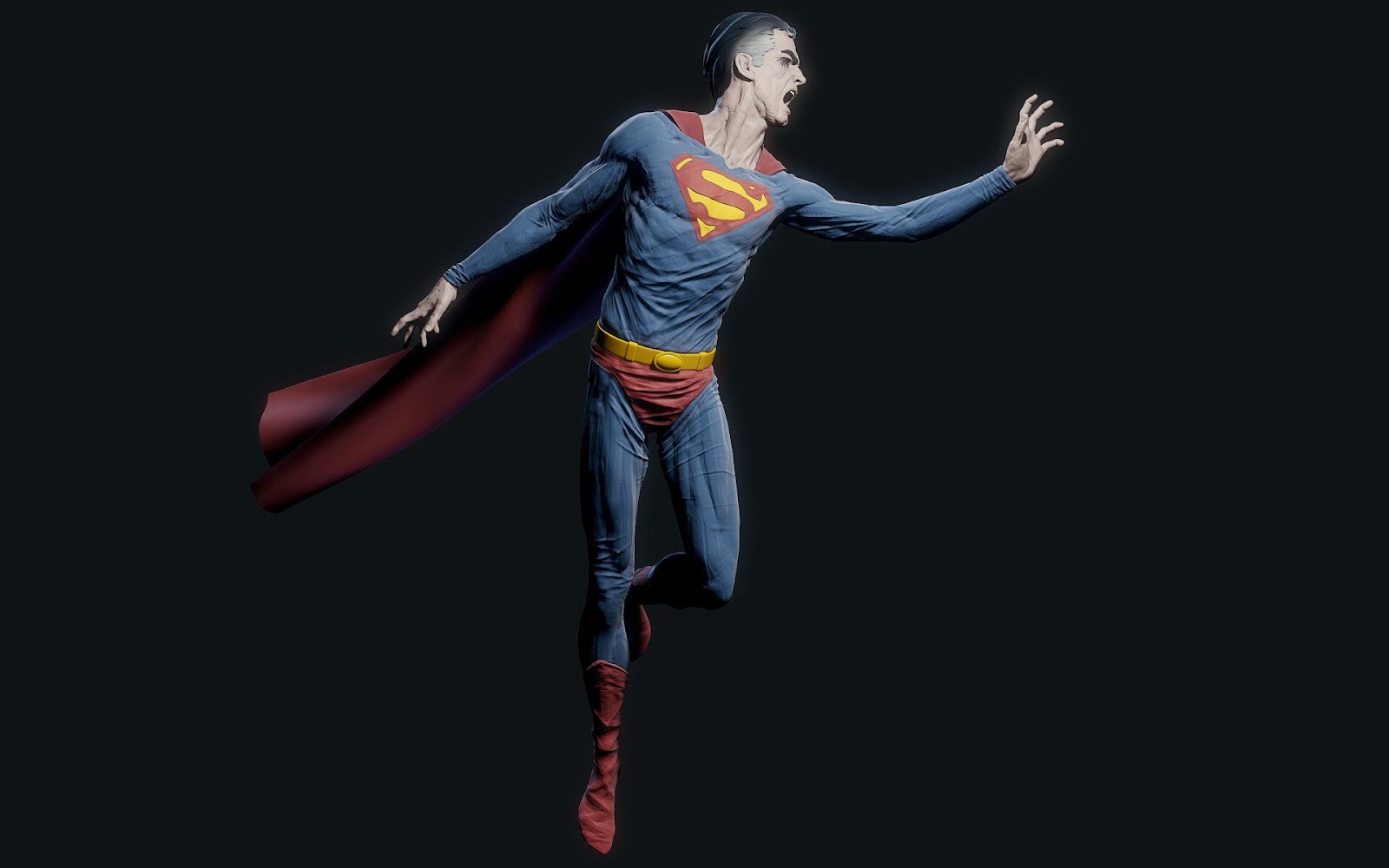
Superman’s Guards


Superman | Sneak Peek

"So I go back into it and I read it and 
and when I'm all done he's like “Alright, 
I think we got a movie,  here —”
he's going “The Problem, though you're 
missing some beats , some action beats 
you need an action beat every 10 pages 
something big has to happen 

I said “What are you thinkin’ about…?” 

He's like well it's just an example, like 
when you go you have a scene where 
Brainiac goes to The Fortress of Solitude 
looking for Superman -- 

(Superman's dead at this point -- 
hope I didn't spoil the movie for anybody —)

"-- so Brainiac's looking for 
Superman at The Fortress of Solitude 
and something should happen there 
there should be a big [ __ ] fight 

I'm like “— but, Superman's Dead at this point —
he's like, "I know I know but can't Brainiac 
fights something else up there?"

and I was like well like what...?

He's like what about, like, 
Superman's Guards, or Soldiers 

And I'm like "....why -- 
Why would Superman need guards...? 
You know he's --
He's Superman he's and -- 

Plus, it's called "The Fortress 
of Solitude" -- nobody's up there..." 

And he said, "Well, Jesus Christ --
he's going how about -- what about, 
where is it is, in The Antarctic?" 

I said yeah 
he's like, "What about polar bears
and I was like polar bears 
he said "Yeah, have 'em.... 
have 'em fight some polar bears -- 

Brainiac shows up, he's trying 
to get in The Fortress 
polar bears come at him and 
he just fuckin' kills one -- and 
one runs away -- 

'Cuz we don't want 
to piss off The PETA-People.

And I said, "You want me to write a scene 
where Brainiac is wrastling polar bears....?" 

And he says, "Yeah, you know anything 
about polar bears...?" and I said, "....no I don't --" 
He's like "Polar bear's the fiercest killers 
in The Animal Kingdom --" [Applause] 

-- and at this point I'm just like 
"This dude has way too much 
access to The Discovery Channel...."


Asexual, Angelic and Disappearing


“Anorexia nervosa is often regarded primarily as a disorder of the body image, with affected individuals submitting themselves to the dictate of a predominant model of slenderness


However, even though this frequently functions as a gateway to the disorder, the paper intends to show that the actual conflict  in anorexia consists in a fundamental alienation  of The Self from The Body. 


In order to analyse this alienation from a phenomenological point of view, the paper introduces the polarity of lived body (body-as-subject) and physical body (body-as-object). 


It then explores the phenomenology of anorexia, drawing on characteristic self-reports as well as on the phenomenological, psychoanalytic and cultural science literature. 


The anorexic conflict of embodiment arises in adolescence, where The Body becomes an object of The Other’s gaze in a special way. 


Starting with an attempt to comply with the ideal body image, the anorexic patient increasingly fights against her dependency on her body and its uncontrollable nature, above all its hunger and femininity


To be in total control of Her Body and to gain independence from it, becomes the source of a narcissistic triumph


Thus, in striving for autonomy and perfection, the anorexic patient alienates herself from her embodiment. 


This results in a radical dualism of ‘mind’ and ‘body’: pursuing The Ideal of an asexual, angelic, even disappearing body. 


Anorexia is thus conceived as 

a fundamental conflict of embodiment.


I'm The Last of The Time Lords...


"I'm the Last of the Time Lords..." | The End of the World (HD) | Doctor...

Paul McGann DOES Count


"I was Dead too long, this time --

Paul McGann DOES Count

Chapter 8
The Night of the Doctor

On the day I killed him, The Doctor was a happy man. Though since what made him happy was a distress call from a terrified woman who died less than seven minutes later, my conscience is clear.

At the time, he was in his eighth and final incarnation. My memory of his appearance is a little hazy, but I have a general impression of dark hair, urgent blue eyes, and a choice of clothing that was probably intended to be swashbuckling. I think there were long boots, possibly a waistcoat, and certainly one of those overcoats with the kind of collar that young men turn up against the wind in the hope that someone might use the word Byronic. He wasn't young, of course: no one can be called young on the day of their death, when they are as old as they will ever be. But the voice echoing round the creaking, wooden cathedral of the TARDIS console room was young enough, and more than adequately terrified.

'Hello, please, hello, can anyone hear me? This ship is crashing, please, is anyone there, can anyone hear me?'

It should be remembered, this was at the heart of the Time War, that endless savage conflict between the Daleks and the Time Lords that threatened every moment of the time continuum. It is strange to reflect that the deadliest conflict history will ever know began between a race of traumatised mutants sealed into tiny battle tanks, and an enclave of time-travelling academics, who had sworn never to interfere in the affairs of the wider universe. However, the day came when the Time Lords of Gallifrey decided that the Dalek mutants posed a threat to all reality, and so attempted to use their time-travel abilities to cancel them from existence. The attempt failed, and the Daleks used their own time-travel machines in a similar attempt to cancel out the Time Lords. And so time became a weapon in a war that could never end, and the conflict spread not only through space, but backwards and forwards through history. Days became battle lines, and century turned on century, and divergent time streams found themselves fighting each other for the right to exist. It was said, one soldier could die a thousand times in one day of that war, and discover he'd never been born the next. And so, when The Doctor heard that cry for help, there would have been countless billions across the universe suffering in exactly the same way. But this young woman had an advantage over all the others who, in that same moment, were also screaming and begging for their lives. She happened to be in earshot of a man who mistook himself for A Hero.

The Doctor had always loved distress calls. They appealed to his vanity. He lived for the thrill of stepping through a door, and seeing all those faces turn towards him in hope and wonder. The danger, too, was delicious. More than delicious; over time it had become necessary. Danger is the only true palliative for a guilty man. And certainly the only drug strong enough for The Doctor.

Setting aside his tea, it took him seconds to track the signal to a little gunship, tumbling towards a red planet. There was one life sign on board, and all the engines were phasing. Clearly, there was no possibility of deflecting the ship's course, and a tractor beam would almost certainly shatter the hull, so a manual extraction was the only possibility. He would have to materialise on board, introduce himself as dramatically as possible, and get her into The TARDIS. She would be so happy and excited to see him. He wondered, briefly, how it would look if he took his teacup with him, but decided the risk of spillage was too great.

'Please, please, somebody, please!'

The fear in her voice would have broken any heart. The Doctor grinned. For the very last time, he slammed the levers, roared the engines, and sent the TARDIS spinning to the rescue.

Although there was no one else to hear, he laughed and whooped. If anything sealed his fate, in that final hour of his existence, it was his laughter. I never wanted to hear that laugh again.

The Cancellation


Doctor Who - The Cancellation

"I was definitely leaving in 
'89 and and had been assured

So They said, "...oh it's that dreadful man who 
does that dreadful show can't we just -- 
can't we just get rid of both of them...?"


zzz


I'd never heard the word cancellation and i wish i had it was a slow realization that oh my god you know it's not coming back i may go down in history as the person who killed off doctor who 1989 i was the person who canceled doctor who probably one of the hardest things that happened to him because he'd made doctor who his life it was a shame that the show was cancelled and canceled on his watch and but one reason for that was he he just did it too long he'd been there for years and years and he should have moved on sooner should you have left earlier i think um yeah i mean but it wasn't for lack of trying it wasn't for lack of trying i didn't want to break any records i really didn't i didn't want to be the longest running producer at all i just wanted to do a stint and i i felt that the the time that i'd finished my stint was that 20th anniversary special but i was deprived of that privilege at the end of uh season 26 we all thought the program was coming back the following year i was there on the last studio day which was the last studio day of ghost light and which was the last story i scored for the show and we had a party afterwards and everyone said see you next see you next year there are all sorts of rumors about whether the show was coming back who was going to produce it but nothing definite came out that didn't worry me or concern me too much because i was often commissioned very late anyway but i always knew when the program whether the program was being made or not and and it wasn't um and eventually i think i spoke to sophie or sylvester or maybe mike tucker and and heard that the word on the grapevine wasn't know the show wasn't being recommissioned for the for the following year or indeed for the foreseeable future certainly i know that sophie and sylvester felt cheated that they didn't get to give their characters a proper send-off um it was just a question of that's it it's the last one as opposed to a story specifically written to write them out i didn't know anything about it until one day at home late i don't know late summer the phone rang it was gnt on the phone he just followed me up to tell me he'd written me a letter which seemed a strange thing he said but i said well you're going to tell me what's in the letter and he told me and it was that um you know it wasn't coming back the next season it wasn't until i was rehearsing for corners one day at north acton that i got a phone call no mobiles of course in those days so in the office and it was sylvester and he said are you sitting down i said well i am now and he said apparently we're not doing any more doctor who you never expect anything actually to have a long life because it never does it always changes that's one of the joys of being an actor but it's also sometimes a bit disappointing and i was i was a bit miffed i thought oh wait a minute i committed myself mentally and i got very excited about this fourth year this total whole year of commitment to doctor who and trying to create the real the doctor i wanted you know the real mccoy i think the decision not to bring it back or to axe the show had been made regardless of what we were doing at that point i don't think it really mattered how well received the shows were i think decisions had been made there was no nobody said oh this is going to be the last season or anything like that it's just that as we got towards the end of it john began to get the sense of things and began to perhaps there had been some something said but nothing nothing explicitly said to him or me but just definitely that he picked up on the grapevine the feeling that there wasn't going to be another season any time soon doctor who had been halted in its tracks by the bbc no one from the corporation's senior management would confirm that the program had been cancelled but at the same time the bbc's drama department were being coy about what they planned to do with the series when i joined the bbc as head of series there were a number of programs there that had been running for a long time i mean i can't quite remember how long all creatures great and small had been running for howard's way had been running for a long time there were only so many hours on british television for drama and i decided that we needed to look seriously these programs and see whether or not we needed to open up the schedules again and doctor who was one of those programs they killed us through scheduling i think because at that time coronation street was the it was the biggest hit on british television it was it was the mountain it was absolutely a monster so moving us from the saturday night slot and putting it up against coronation street is basically like putting an infant on on the m1 and letting him try and walk across to the other side we were doomed i mean we were not sent out on a suicide mission we all know why the series ended the series ended because um the bbc at the time was entirely run by people who hated science fiction it's that simple that's why there was no science fiction on television on the bbc for like 10 years afterwards they didn't like it they were mostly public school oxbridge educated people who feared more than anything else the embarrassment of their peers it was somewhat of an embarrassment to the drama department um i think at the production level people at afms and design costume people loved working on it because it was a challenge but in terms of the ambitious would-be producers who filled the script in the department it was looked at as something that would be a career killer it wasn't seen as something that they the department was proud of it was i i think if they could have farmed it off to the children's department they'd all be very happy everyone's very quick to blame jnt for absolutely everything that happened in the last few years of doctor who including its demise really john it turns out was struggling against enormous odds everything else was just maneuvering really they didn't wouldn't let john retire john's kept on saying i don't want to go where they won't let me go they keep saying they'll cancel the program if i if i go and that's that's what i heard i mean that's what john said and it was so obvious you know the the management just hated it they just really really hated it nobody really knew what to do with it nobody knew how they should proceed if j t moved on i had no idea the reason dr who finished in 1989 was that we had really decided that this wasn't the program that it had been and that if it was ever to have any life again in the future it needed a long rest not quite as long a rest as actually turned out to be the case michael grade had actually tried to cancel the programme um a few years beforehand when he'd been controller of bbc one so when jonathan pyle and i talked about uh not renewing it the following year i think initially he was probably quite cautious about it and sort of said to me well michael grade couldn't do it had there been somebody around who was absolutely passionate about the program a producer a writer who had got a vision of that program that would actually bring it into a new sort of life a new world because every program needs reinventing every so often it could have been an option to actually push that forward at that stage but i couldn't see anybody there around nobody was certainly making themselves evident that they were passionate to become involved with doctor who because i think most people at that stage regarded it as a program that had seen better days and i decided let's just give it a rest a lot of people saw that as a smoke screen i think to to cancellation but it really wasn't that um i thought probably it would come back on the air again three or four three or four years time as it was it took considerably longer than that doctor who's final episode was shown on bbc one on wednesday the 6th of december 1989. doctor who's 26 year run had come to an end i was really upset um and sort of shocked i think it was a shame that the program was cancelled when it was i think it was a shame that it was canceled in the way it was cancelled which was basically to keep everyone hanging on then suddenly oh no we're not doing it it needed to be treated in a different way it needed a rest it needed people to think about it in a different way i don't know if it needed to wait as long as it did to come back i'd like to be remembered for keeping it going rather than finishing it off you're gonna see all sorts of things ghosts from the past aliens from the future there'll be no cliffhanger ending no i'll be back yes i'll be back just a wave and a fond farewell would i've taken the big job on doctor who if i'd known then what i know now you betcha

Tuesday, 17 June 2025

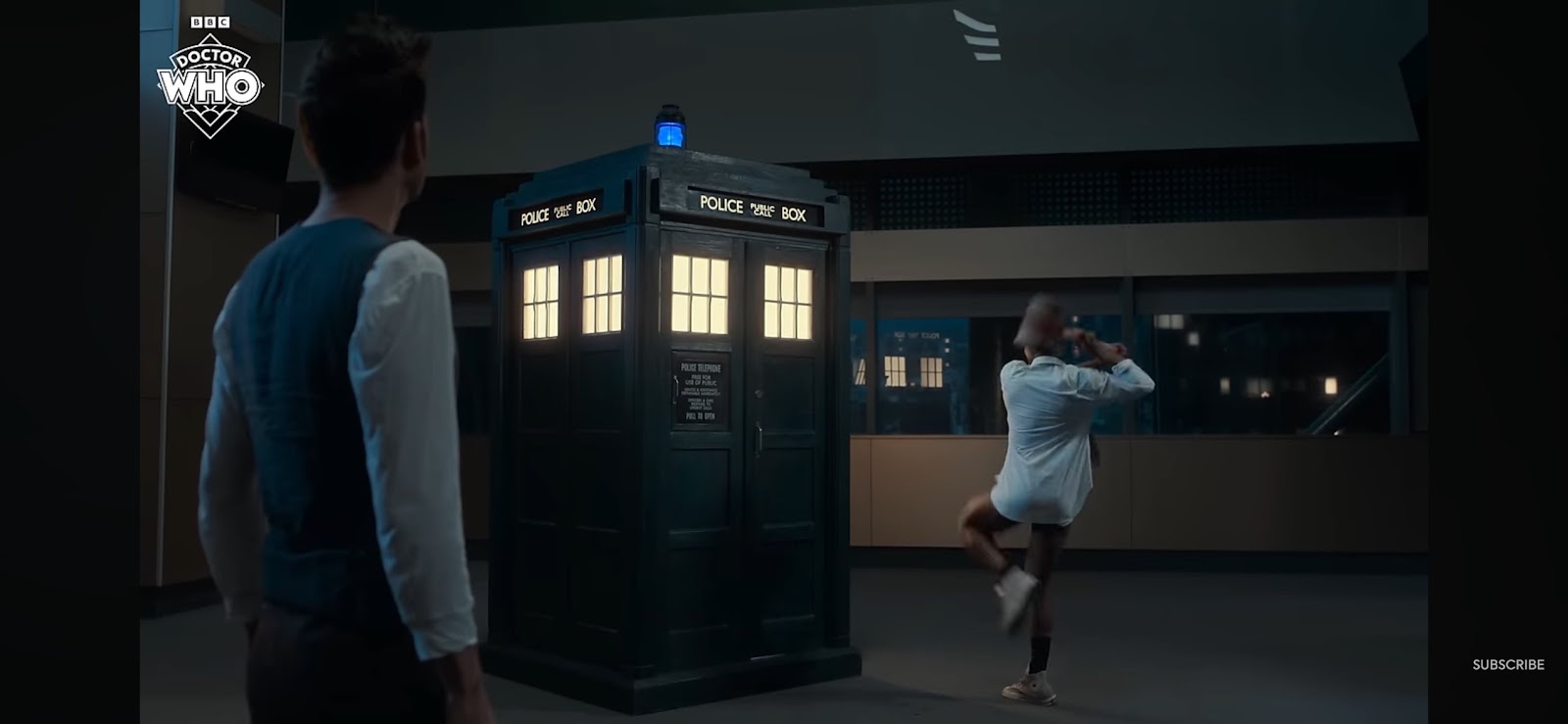
Percussive Maintenance


Russell T Davies Explains the 14th Doctors Bi-generation


"It kind of preyed on me -- I mean 
The Regeneration is always done as 
A Tragedy and A Sadness and, you know, 
"Life moves on --", and stuff like that; 
I thought, "Oh, let's have a happy one -- 
That's the only option left that's the only do 
But, let's have a happy one --

And my theory is, okay -- 
....should I do my theory about this, because;
I think there's no better place to say it that --
Um I think what with Peter having 
been in, and Colin having been in...

I think down The Timeline, they all separated,
they all went -- like that, they -- All The Doctors 
came back to life with their individual TARDISes; 


It's The Gift of The Toy maker and they're all out there traveling around what I'm calling a doctor verse wow look at this doct verse this is Major this is and I want to know I want to create a future in which in which sylvest mcco just arrive and have an adventure without you know because one of the things about the star Beast is to get you back and cathic back we to jump through so many Hoops you know is great story but it's like it's like why can't you just arrive and step out the so hopefully it creates a future in which that happens yeah because when in these things this bit may not be that interesting to people whove already seen them on the I player but these tales of the T that you done when obviously you're dealing with some actors who are not the age they once were but you're just you're not addressing that you're just and no there's kind of little line say oh the timelines and things none of us none of them find it strange I think if we ever do another little spin if I could it it's pretty hard to find an adventured stop in which to say this oh yes by the way we once all you know 

I think Peter Davidson once was left behind on the surface of Androzani 
and woke up and there was a Tardis and he carried on having those Adventures CU exactly what big finish does it's exactly what everyone does Sylvester in his says doesn't he he says there are different timelines and I'm not this I'm from a timeline in which I I didn't change I just got old right right and I love that and actually s fiction right you know we're coming from a history of kind of linear science fiction' 60s 7 80s where the doctor regenerates now we live in the world of the spiderverse and multiverses are the thing and no one has a problem following this

So, I think it's time to just 
kind of open it up and say
"They're all out there now, like the way -- 
Colin Baker once turned up to
Save Patrick Troughton's life --


That doesn't make 
any sense whatsoever...!!

What I'm now saying, 
that was a little echo, 
The Happening backwards —

Yes, nice --

 ...is anyone Listening 
to a word we I say....? 


Not a word --

---this is De 
I am I'm fascinated, 
deep fandom, yeah....

Monday, 16 June 2025

He Had Never felt Saner in His Life.


The etymological root of 
"anorexia"
just happens to be the Greek word
for "longing."


His mind at rest on the matter of his weight loss, Halleck neither weighed himself nor thought much about the matter for another four days . . . and then an embarrassing thing very nearly happened to him, in court and in front of Judge Hilmer Boynton, who had no more sense of humor than your average land turtle. It was stupid; the kind of thing you have bad dreams about when you’re a grade-school kid.

  Halleck stood to make a objection and his pants started to fall down.

  He got halfway up, felt them sliding relentlessly down his hips and buttocks, bagging at the knees, and he sat down very quickly. In one of those moments of almost total objectivity—the ones which come unbidden and which you would often just as soon have forgotten—Halleck realized that his movement must have looked like some sort of bizarre hop. William Halleck, attorney-at-law, does his Peter Rabbit riff. He felt a blush mount into his cheeks.

  “Is it an objection, Mr. Halleck, or a gas attack?”

  The spectators—mercifully few of them—tittered.

  “Nothing, your Honor,” Halleck muttered. “I . . . I changed my mind.”

  Boynton grunted. The proceedings droned on and Halleck sat sweating, wondering just how he was going to get up.

  The judge called a recess ten minutes later. Halleck sat at the defense table pretending to pore over a sheaf of papers. When the hearing room was mostly empty, he rose, hands stuffed into his suit coat pockets in a gesture he hoped looked casual. He was actually holding his trousers up through his pockets.

  He took off the suit coat in the privacy of a men’s room stall, hung it up, looked at his pants, and then took off his belt. His pants, still buttoned and zipped, slithered down to his ankles; his change made a muffled jingle as his pockets struck the tile. He sat down on the toilet, held the belt up like a scroll, and looked at it. He could read a story there which was more than unsettling. The belt had been a Father’s Day present two years ago from Linda. He held the belt up, reading it, and felt his heart speeding up to a frightened run.

  The deepest indentation in the Niques belt was just beyond the first hole. His daughter had bought it a little small, and Halleck remembered thinking at the time—ruefully—that it was perhaps forgivable optimism on her part. It had, nevertheless, been quite comfortable for a long while. It was only since he’d quit smoking that it got to be a bit hard to buckle the belt, even using the first hole.

  After he’d quit smoking . . . but before he’d hit the Gypsy woman.

  Now there were other indents in the belt : beyond the second hole . . . and the fourth . . . and the fifth . . . finally the sixth and last.

  Halleck saw with growing horror that each of the indents was lighter than the last. His belt told a truer, briefer story than Michael Houston had done. The weight loss was still going on, and it wasn’t slowing down; it was speeding up. He had gotten to the last hole in the Niques belt he’d believed only two months ago he would have to quietly retire as too small. Now he needed a seventh hole, which he didn’t have.

  He looked at his watch and saw he’d have to get back soon. But some things were more important than whether or not Judge Boynton decided to enter a will into probate.

  Halleck listened. The men’s room was quiet. He held up his pants with one hand and stepped out of the stall. He let his pants drop again and looked at himself in one of the mirrors over the row of sinks. He raised the tails of his shirt in order to get a better look at the belly which until just lately had been his bane.

  A small sound escaped his throat. That was all, but that was enough. The selective perception couldn’t hold up; it shattered all at once. He saw that the modest potbelly which had replaced his bay window was now gone. Although his pants were down and his shirt was pulled up over his unbuttoned vest, the facts were clear enough in spite of the ludicrous pose. Actual facts, as always, were negotiable—you learned that quickly in the lawyer business—but the metaphor which came was more than persuasive; it was undeniable. He looked like a kid dressed up in his father’s clothes. Halleck stood in disarray before the short row of sinks, thinking hysterically: Who’s got the Shinola? I’ve got to daub on a fake mustache!

  A gagging, rancid laughter rose in his throat at the sight of his pants bundled around his shoes and his black nylon socks climbing three-quarters of the way up his hairy calves. In that moment he suddenly, simply, believed . . . everything. The Gypsy had cursed him, yes, but it wasn’t cancer; cancer would have been too kind and too quick. It was something else, and the unfolding had only begun.

  A conductor’s voice shouted in his mind, Next stop, Anorexia Nervosa! All out for Anorexia Nervosa!

  The sounds rose in his throat, laughter that sounded like screams, or perhaps screams that sounded like laughter, and what did it really matter?

  Who can I tell! Can I tell Heidi? She’ll think I’m crazy.

  But Halleck had never felt saner in his life.


Sunday, 15 June 2025

Choose.


Captain HOLLISTER walks in from his office.

HOLLISTER:  Lister!

He motions for LISTER to come into his office, which he does.

LISTER: You asked to see me, Captain?

HOLLISTER: Where's the cat?

LISTER: What?  What cat?

HOLLISTERLister, not only are you so stupid 
you bring aboard an unquarantined animal and 
jeopardise The Live of every Man and Woman 
on This ship -- not only that -- but you take a photograph 
of yourself with the cat and send it to be processed 
in the ship's lab --  

Now, I' m going to ask  you again, 
Do you have a cat?

LISTER: No.

HOLLISTER: (Holding up a photo of LISTER and FRANKENSTEIN) Have you got a cat?

LISTER: Er, yes, that one.

HOLLISTER: Where'd you get it?  Titan?

LISTER: Yes.

HOLLISTER: Don't you realise that that thing could be carrying anything?  Don't you remember what happened on the "Oregon" with the rabbits?  

Lister, a loose animal aboard this ship could get anywhere. 
It could get into the air ducts.  It could get into Holly.  

You know, a  little nibble here and a little nibble there, Lister, and before you know it we're flying backwards.  

Now I want that cat, and I want it now.

LISTER: Sir, just suppose I did have a cat....  Just suppose.  
.....What would you do with Frankenstein?

HOLLISTER: I'd send it down to the medical centre
and I'd have it cut up and tests run on it.

LISTER: 
......Would you put it back 
together when you'd finished?

HOLLISTER: Lister, the cat would be dead.

LISTER: So, with respect, sir, what's in it for the cat?

HOLLISTER: Lister, give me that cat!

LISTER: It's not as easy as that!  Me and the cat, we're going to have a baby cat, and we're going to buy a farm on Fiji, and we're going to have a sheep and a cow and three horses, it's me plan, and no one can  get in the way of it, not even you, and I do respect ya!  (Remembering) Sir!

HOLLISTER: Lister, do you want to go into stasis for the rest of the trip  and forfeit 18 months wages?

LISTER: No.

HOLLISTER: Do you want to give me that cat?

LISTER: No!
HOLLISTER:  Choose.

Life's Hard Enough When You Belong Here


“I said, ‘Yeah -- but I don’t see anyone •else• around Here, laughing.....’” 

-- Shatner.

“ ‘Life’s Tough.’? Fancy Talk, 
Strange •Visitor• from Another Planet....

You Don’t Have a CLUE What it Means to Live in •Fear•, DO You....?”

So Begins,The Cautionary Tale of The Man in Black 
and The Old, White Mid-Western Dad-God --

It’s just like Casablanca : Everything on Red, 
pin •all• Our Best Hopes on Big Blue, but 
•Always• bet on BLACK -- 

“Rule # 1 : He Who Has The Power 
makes The Rules -- (Obvious.)

Like A Dog lying in A Corner,
They will Bite You and •never• warn•You
Look Out -- They'll Tear Your Insides out..!!

'Cause everybody 
•HATES• A Tourist --
Especially one who Thinks 
it's All, such A Laugh....

and You will •never• understand :
How it •FEELS• to Live Your Life,
with no Meaning or Control;
if You called Your Dad, 
he could •Stop• it ALL*, yeah --“


 [ * Superman II ]


Saturday, 14 June 2025

Animals in Cages


The Scientist :
Security, we have a break-in. Get the...!
I know Who You Are. I know What You THINK...

Animal Liberation Activist :
If you don't wanna get hurt
keep your mouth shut and don't 
move a f*cking muscle.

The Scientist :
The chimps are infected!
They're - They're HIGHLY contagious. 
They've been given an inhibitor.

Animal Liberation Activist :
'Infected' with what?

The Scientist :
In order to Cure
You must first understand.

Animal Liberation Activist :
Infected with WHAT?

The Scientist :
....Rage.

Second Animal Liberation Activist :
What is he talking about?

Animal Liberation Activist :
Get The Cages open.

The Scientist :
No! No! No!

Animal Liberation Activist :
Listen, you sick bastard, We're going
and We're taking your Torture-victims with us.
(to The Ape) We're gonna get you out of here.

The Scientist :
The animals are contagious
The Infection is in their blood 
and saliva. One bite...

Stop... STOP! You've NO idea!

(The Ape INSTANTLY savages The Activist who has just unlocked his cage)

Animal Liberation Activist :
[screaming] Get it off! Help me!
Get it off! Get it off!

(Now infected, The Activist goes (more) crazy, and flies into a violent Ragelashing out at everyone, in all directions)

Second Animal Liberation Activist :
What's the matter with her?

The Scientist :
You HAVE to kill her!

Second Animal Liberation Activist :
[screams] Oh, my God!
What's the matter with her?

The Scientist :
We have to kill her NOW!