Sunday, 1 March 2026

Bad Dreams in The Night

Laura Palmer: 

My Secret Diary... 

There are pages missing.


Harold Smith: 

Who would DO that?


Laura Palmer: 

BOB.


Harold Smith: 

…. But, BOB is not real.


Laura Palmer: 

….. There are 

pages torn out! 


That is REAL, Harold!


Harold Smith: (not Coping)

……Okay, okay, maybe...


Laura Palmer: 

— BOB is real! 

……He's been having me 

since I was Twelve


And, 

The Diary was hidden too well.

 There is no other person 

who could have known 

where it was

…….He comes in 

through My Window 

at night


He's real. He's getting 

to know me now….


He speaks to me.


Harold Smith: 

What Does BOB Say?

[ Ya had to ask….]


Laura Palmer: 

…… HE says He 

wants to Be Me 

or HE’ll KILL Me.


Harold Smith: 

……No. …..No!


Laura Palmer: 

YES! Yes.


Harold Smith: 

What? Please, what?


Laura Palmer: 

(losing grip on Her Rage)

FIRE... 

WALK... 

with... 

ME……


BOB :

ME!


“When Blue Velvet was released, Lynch was criticised for the voyeuristic way in which he depicted sexual violence and the rape of Isabella Rossellini’s character Dorothy Vallens. The reaction was so strong that the film was picketed by protestors when it opened in London. Lynch responded by arguing that he was just being true to his characters. He did not agree with the assumption that Dorothy Vallens could be viewed as a representative of every woman. Thinking like this, in his view, prevented you from creating specific singular characters. ‘Suddenly, if it’s a Black man, he represents all Black men,’ he complained. ‘If it’s a woman, she represents all women. If it’s a kid, it’s all kids. And they just go to town on you.’ Speaking to the writer Chris Rodley in 1997, Lynch described ‘political correctness’ as ‘almost an evil, satanic plot! It’s a diabolical thing. It’s this false way of not offending anyone.’ 


Lynch’s way of working, as we’ve noted, was bottom-up. It started with an idea, and this generated characters that he strived to depict as faithfully as he could. Larger, top-down concerns, such as the overall depiction of women in American films in the 1980s, did not factor into this. He had very little interest in politics and, with the exception of Dune, his films did not concern themselves with the larger society outside of his characters’ world. He showed little interest in interrogating the assumptions and prejudices that shaped him as a child, through which his ideas emerge. He believed that problems needed to be solved at the level of The Individual, and he seemed lost or baffled by society-level issues that prevented this. The question of why people do bad things runs through Lynch’s work. 


As is often noted, sexual abuse and violence against women occurs constantly in his films. Typically, he struggles to condemn The Abusers and instead is more interested in exploring what makes them behave as they do. Many of his Killers and Abusers – including Frank Booth from Blue Velvet, Fred Madison from Lost Highway, Diane Selwyn from Mulholland Drive and even the chicken-bothering monkey in a suit from the Netflix short film What Did Jack Do? – are motivated by love, albeit love that has soured into something toxic, jealous and controlling. After it was revealed that Laura Palmer was raped and murdered by her own father, Twin Peaks went on to redeem him. Leland Palmer was not responsible for his own actions, we were told, because he was possessed by an evil external entity called BOB. On paper this looks like it should be easy to condemn, but Lynch’s refusal to fall into simplistic black and white thinking makes it more difficult in practice. After Twin Peaks: Fire Walk with Me, Lynch received many letters from young women who had been abused by their own fathers who were puzzled by how he could understand what this was like. As the writer Chris Rodley notes, ‘Despite the fact that the perpetration of both incest and filicide was represented in the “abstract” form of Killer BOB, it was recognised as faithful to the subjective experience.’ It is notable that Lynch-fandom usually skews female. 


When Lynch thinks about Society rather than The Individual, he is noticeably less assured. It’s nothing to do with right wing or left wing,’ he said in the late 1990s, discussing the perennial belief that the world was going to pot. ‘We’ve got to contain everything long enough to get a new plan, and that plan has got to recognize all voices. Maybe it means having the police in the streets everywhere for five years, just to prevent anything horrible happening while we get it together and make everything fair.’ Arguing that five years of martial law is a reasonable solution is a style of thinking reminiscent of Donald Trump. 


Despite the two men having very different personalities, they are both people who are, ultimately, led by intuition rather than intellect. Although he had previously voted for Bernie Sanders, Lynch told the Guardian journalist Rory Carroll that he was ‘undecided’ about President Trump. ‘He could go down as one of the greatest presidents in history because he has disrupted the thing so much,’ he said. ‘No one is able to counter this guy in an intelligent way.’ Trump then picked up on these comments, seeing them as proof that he was secretly loved by the Hollywood elite. He read them out at a rally in South Carolina in June 2018, telling his supporters that David Lynch, ‘the great filmmaker’ and ‘a Hollywood guy’, risked ending his career by making these comments. Trump, being Trump, mixed up Lynch’s name with his own and mistakenly proclaimed to the crowd, ‘David Lynch could go down as one of the greatest Presidents in history!’ The crowd cheered regardless.


Lynchian : 

The Spell of David Lynch


Be Charming to Your Virus


KRYTEN 
There is one option, sir... 
I believe you might 
Have a Chance if You, 
well, reason with it. 

LISTER 
Reason with what

KRYTEN 
The Virus, sir. 
After all, it is 
intelligent. 

LISTER 
Kryten, are your neural circuits 
picking up Interference from 
the tumble-drier again? 

KRYTEN 
If We can patch-in 
The Universal Translator
it might just be possible 
to Talk to it —

I Believe it's Your 
only chance, sir. 


[-- x - Int. Starbug medibay --] 
[ALL present] 

KRYTEN 
It's a long shot, I know, but 
if we can reason with it, 
We might persuade 
it to leave

Now, remember :  
Be charming. 

LISTER 
Be charming to 
my virus... right. 

KRYTEN 
Patching in the U.T... 

<A floating, holographic screen spins into existance. On it is rendered something akin to a pulsating, animated Julia Set fractal, in colours of red and green

EPIDEME 
Aaaand a great big "Hi!" to all of you 
out there in flesh-and-blood land! 
And tonight, Dave Lister, assistant vending machine 
sub-operative, and spice food conneseur, 
This is your death

<The epideme virus has a loud, intimidatingly brash voice, and is somewhat reminiscent of The Plant from Little Shop Of Horrors. The fractal image expands and contracts to match the virus's tone and inflections

EPIDEME
Your line... 

KRYTEN 
I take it we're speaking 
with the Epideme virus..? 

EPIDEME 
Give that man an eyebrow! Heyyy, 
I'm feeling generous, give him two

KRYTEN 
Well, er, maybe we should, um, can I -- 

EPIDEME
Dave... let's run down the rules. If you win : 
You get to live; if I win: you get to die, and 
I take all your knowledge then I kill you... 

LISTER 
What? You absorb knowledge 
from every person you kill? 

EPIDEME 
So, as you can appreciate, killing you ain't exactly a career highlight... No offence, but when you're a virus there's not much call for knowing how to open a lager bottle with your anus

LISTER 
How can you justify killing 
another living being? 

EPIDEME 
How about that chicken you 
biriani'd last night? How can 
you justify killing that?? 

LISTER 
Me and The Chicken... 
it was different

EPIDEME 
How's that, David..? 

LISTER 
Well, I'm A Person
it was A Curry. 

EPIDEME
He died so *you* could go on living; 
is that so different from what I'm doing? 

LISTER 
Of course it is! Totally! 
I'm a human being, 
I have certain qualities 
that elevate me above poultry! 
I can think; I can play the guitar -- 

CAT
Better than A Chicken? 
Are you crazy? 

KRYTEN 
We're losing the argument, sir! 
You better move on to another subject. 

LISTER
-- I'm the last guy alive! 

EPIDEME
And that gives you more 
right to exist than me..?

 LISTER 
Well, yeah... because -- 

EPIDEME 
Time for your species to check out, Davey. 
Arevaderche, humies... 

[-- x - Int. Starbug mid-section -- ] 

[LISTER present, patched into the universal translator. EPiDEME virus visible on it's screen

EPIDEME
David, come on... You've got A Virus; it's fatal
it happens. Doesn't mean we can't be friends

<Frustrated, LISTER reaches 
to disengage the translator

EPIDEME 
Don't touch that dial!! [Exit EPIDEME]


They Have Nowhere to Go if They Don't Survive.

My experience is
universally negative.
Universally negative.

I've never had 
a positive encounter 
with Mossad; 
I have never met a CIA officer who 
has had a positive encounter with Mossad; 

Because The Mossad doesn't give two
shits what you think or what you are
trying to focus on in your job. 
They care only about Israel

And if that means shoving 
their fists up your ass or
trying to recruit you or telling you to go 
[ __ ] yourself while they try to
recruit, you know, the guy sitting next
to you or the guy in the 
defence contractor's office
They don't care
what you think of them
because for them it's 
an issue of
survival

They have nowhere to go
if They don't survive


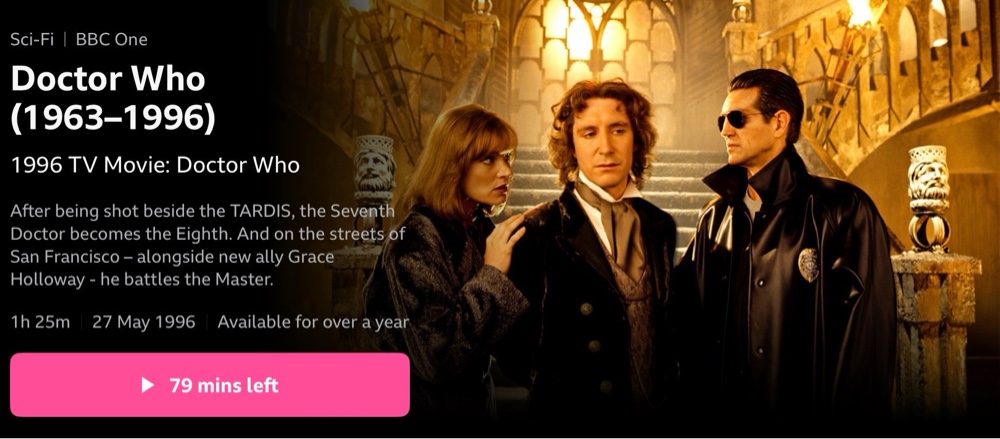
GRACE
So, Time Travel's possible?

Life's Champion
Anything's Possible.

GRACE
And why don't You have the ability to 
transform yourself into another species
like The --

Life's Champion
Well, I DO, but only when I Die.

GRACE
And that rival Time Lord, 
The Master?

Life's Champion
He's on His Last Life, fighting to Survive
And The Science has shown us over and over
in The Fight for Survival 
There ARE No Rules.


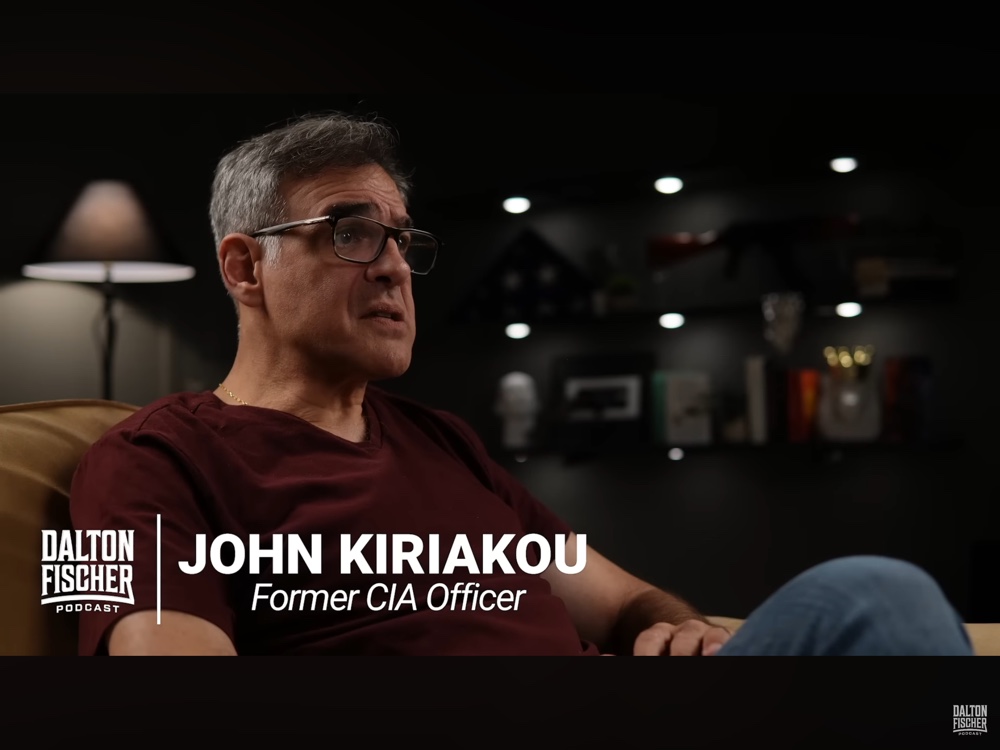
This Is Why People Fear The Mossad | Former CIA Officer John Kiriakou

Let's move into the MSAD a little bit.
You've talked about in interviews that
the Israelis are ranked critical threat
for counter intelligence
a little bit about our relationship with
them, but something that I'm really
interested in is the MSAD operationally
because I think again correct me if I'm
wrong, but it seems like you'd be
hard-pressed to argue with the fact that
they are really, really good --

Best in The World.


So yeah, I guess broad question like
what has been your experience while at
the agency talking to other case
officers, working with The Israelis?
What stands out? 

My experience is
universally negative.
Universally negative.

I've never had 
a positive encounter 
with Mossad; 
I have never met a CIA officer who 
has had a positive encounter with MSAD; 

Because the MSAD doesn't give two
shits what you think or what you are
trying to focus on in your job. 
They care only about Israel

And if that means shoving 
their fists up your ass or
trying to recruit you or telling you 
to go [ __ ] yourself while they try to
recruit, you know, the guy sitting next
to you or the guy in the 
defence contractor's office, 
They don't care
what you think of them
because for them it's 
an issue of
survival

They have nowhere to go
if They don't survive


Saturday, 28 February 2026

……Excuse Me,


— Let Me Stop 
You right There :

They’re CANNIBALS.
They’re EATING CHILDREN.

I’m sorry for interrupting;
what were You Saying….?

Thursday, 26 February 2026

"Life" is What Happens Whilst Other People Are Busy Making Plans...


  1. Arrival in Northumbria 
  2. Position atomic cannon 
  3. Sight Vikings 
  4. Light Beacon Fires
  5. Destroy Viking Fleet
  6. Norman Landing
  7. Battle of Hastings
  8. Meet King Harold


" The Lights snapped out. Not a trace remained of the Ward Lord and the five guards who had come to rescue him.

"Bravo," exclaimed The Doctor. "Good riddance." He looked up. "I'm glad that my evidence was so useful to the court." He turned to Zoe and Jamie, 'Well, come along. We'd better continue with our travels."

"No," boomed the voice. "You will now stand your trial. Let us hear the accusations."

The accusing Time Lord spoke. "The charges are two. Appropriation of a TARDIS without persmission, and interference into other people's affairs. The latter is the most grave since non-interference is our most important law."

"Well," asked the voice. "Do you admit these actions?"

"It isn't a very good TARDIS," said The Doctor. "It doesn't change shape and it won't go where I want it to go --- "

"That is the lesser charge," said the other Time Lord present. "What of non-interference?"

"I wanted to help people, to combat evil. Look how I've risked my life fighting the Daleks. They want to exterminate everyone. Then there are the Cybermen, a nasty lot. Do you know about the Krotons, and the Yeti? Not forgetting the Quarks and the Ice Warriors. It's True I've interfered, but always on the side of good against evil."

"Then you admit the charge?" thundered the accusing Time Lord.

"Of Course I do. But your way of observing and doing nothing, it makes life so... so..."

"Yes?" boomed the voice.

The Doctor looked upwards. "It's downright dulll!"

"We have heard your defence," said the voice. "You will be held in custody while we consider our judgement."

What about my two friends?" he asked the court.

"Whatever the outcome for you," said the voice, "they will be well treated. You know that we are always just." 

"Yes," said The Doctor, hanging his head. "I know only too well."


******

"And now," said the voice, "the question of what to do with you. What do you expect us to do with you?"

 The Doctor thought. "Dematerialisation?"

"We are not savages."

"Perhaps you will sentence  me to work in the archives for the next thousand years, something boring like that."

"No," said the voice. "We accept that there is evil that must be fought, and that you still have a part to play in that battle."

The Doctor couldn't believe his ears. "You're going to set me free?"

"Not entirely. We have noted your special interest in the planet Earth. You seem to have a special knowledge of that world and it's problems."

"I suppose I have," said The Doctor/ "Earth seems particularly vulnerable to attack by other worlds."

"For that reason you will be sent back to that planet, in exile."

"Exile?"

"You will remain there for such time as we deem proper. During that time, the secret of the TARDIS will be taken from you."

"Surely, " The Doctor pleaded "you can't condemn me to exile on one primitive planet! Besides, I'm known on Earth already. It will be very difficult for me."

"Your appearance has changed before : it will change again."

"You can't change what I look like without consulting me!"

"Here is your first choice," said the voice. On the screen appeared a man's face - sunken cheeks, hair white, dull eyes.

"Good gracious," exclaimed The Doctor. "Too old!"

The first picture was replaced with another.

"No, never! Too thin."

Another picture appeared.

"Too young. No one would respect me..."

"You are wasting time," said the great voice.

"It's not my fault, is it? Is this the best you can do? I've never seen such an incredible bunch! "

"The Decision will be taken for you."

"This is preposterous! I have a right to decide what I look like. People on Earth attach great importantance to appearance..."

As he spoke The Doctor vanished from where he had been standing. It was now his face that filled the screen. He looked down angrily.

"Is this some sort of joke? Put me back where I was!"

The great voice said, "The time has come for you to change your apparance and to begin your exile. There will be no further discussion."

"I refuse to be treated like this," said The Doctor. "What are you doing now?"

The Doctor's face on the screen had begun to revolve, first slowly then fast.

"Stop!" his voice cried out. "You're making me giddy... I won't have it! You can't do this to me!"

The image of The Doctor's face spun faster and faster until it became a blur. Finally the screen went blank and The Doctor's voice was heard no more.

The accusing Time Lord looked upwards. "I think you did right. He never would have fitted in back here."

"I agree," said the great voice. "It's a pity. He would have brightened the place up no end."


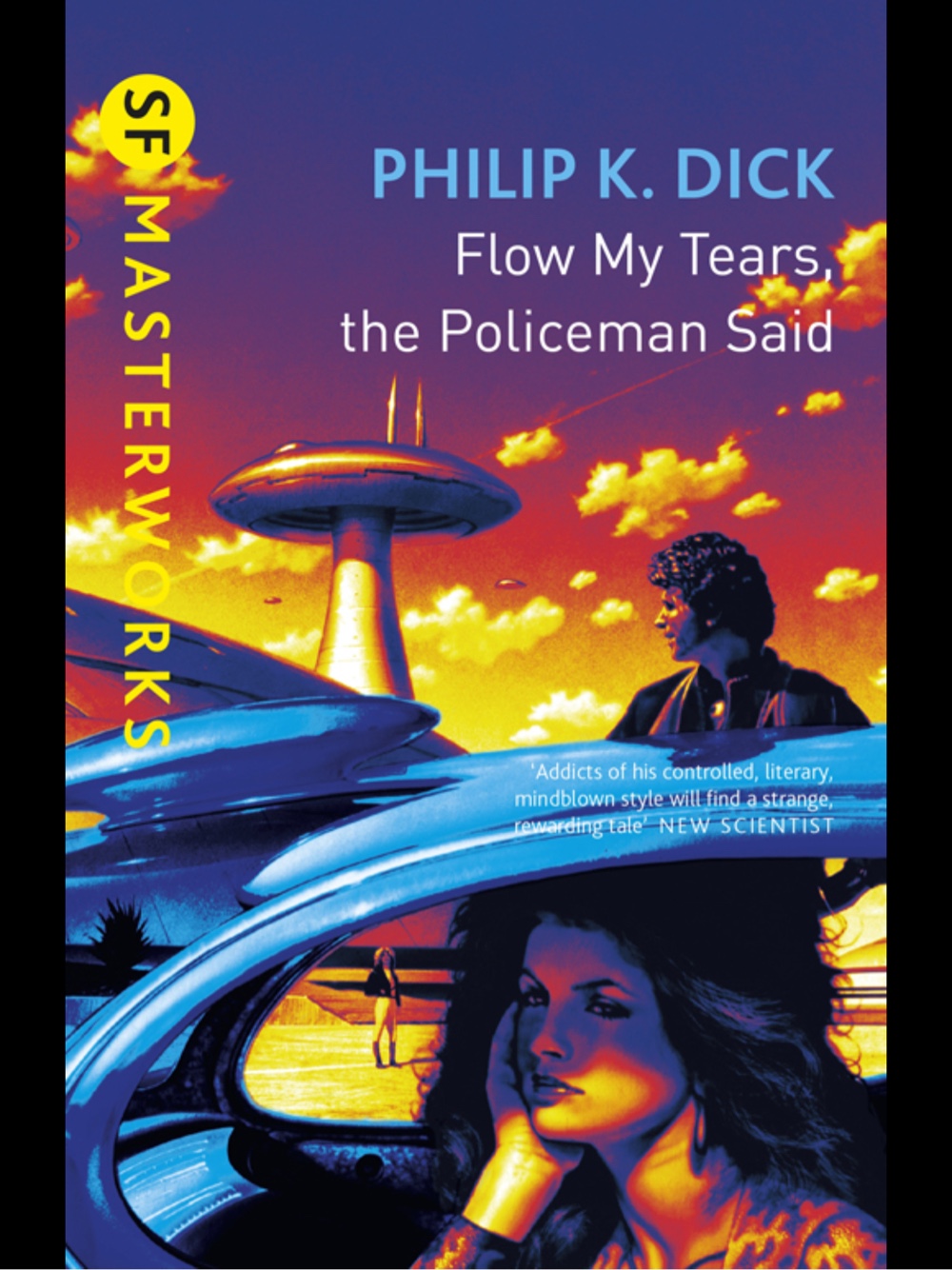
KR-3


Phil Westerburg, the Los Angeles Police Agency chief deputy coroner, said to General Felix Buckman, his superior, ‘I can explain the drug best this way. You haven’t heard of it because it isn’t in use yet; she must have ripped it off from the academy’s special-activities lab.’ He sketched on a piece of paper. ‘Time-binding is a function of the brain. It’s a structuralization of perception and orientation.’ 


‘Why did it kill her?’ Buckman asked. It was late and his head hurt. He wished the day would end; he wished everyone and everything would go away. ‘An overdose?’ he demanded. 


We have no way of determining as yet what would constitute an overdose with KR-3. It’s currently being tested on detainee volunteers at the San Bernardino forced-labor camp, but so far’ – Westerburg continued to sketch – ‘anyhow, as I was explaining. Time-binding is a function of the brain and goes on as long as the brain is receiving input. 


Now, we know that the brain can’t function if it can’t bind space as well … but as to why, we don’t know yet. Probably it has to do with the instinct to stabilize reality in such a fashion that sequences can be ordered in terms of before-and-after – that would be time – and, more importantly, space-occupying, as with a three-dimensional object as compared to, say, a drawing of that object.’ 


He showed Buckman his sketch. It meant nothing to Buckman; he stared at it blankly and wondered where, this late at night, he could get some Darvon for his headache. Had Alys had any? She had squirreled so many pills. 


Westerburg continued, ‘Now, one aspect of space is that any given unit of space excludes all other given units; if a thing is there it can’t be here. Just as in time if an event comes before, it can’t also come after.’ 


Buckman said, ‘Couldn’t this wait until tomorrow? You originally said it would take twenty-four hours to develop a report on the exact toxin involved. Twenty-four hours is satisfactory to me.’ 


But you requested that we speed up the analysis,’ Westerburg said. ‘You wanted the autopsy to begin immediately. At two-ten this afternoon, when I was first officially called in.’ 


‘Did I?’ Buckman said. Yes, he thought, I did. Before the marshals can get their story together. ‘Just don’t draw pictures,’ he said. ‘My eyes hurt. Just tell me.’ 


The exclusiveness of space, we’ve learned, is only a function of the brain as it handles perception. It regulates data in terms of mutually restrictive space units. Millions of them. Trillions, theoretically, in fact. 


But in itself, space is not exclusive


In fact, in itself, space does not exist at all.’ 


‘Meaning?’


Westerburg, refraining from sketching, said, ‘A drug such as KR-3 breaks down the brain’s ability to exclude one unit of space out of another. So Here versus There is lost as the brain tries to handle perception. 


It can’t tell if an object has gone away or if it’s still there


When this occurs the brain can no longer exclude alternative spatial vectors. It opens up the entire range of spatial variation. 


The brain can no longer tell which objects exist and which are only latent; unspatial possibilities. So as a result, competing spatial corridors are opened, into which the garbled percept system enters, and a whole new universe appears to the brain to be in the process of creation.’


I see,’ Buckman said. But actually he did not either see or care. I only want to go home, he thought. And forget this. 


‘That’s very important,’ Westerburg said earnestly. ‘KR-3 is a major breakthrough. Anyone affected by it is forced to perceive irreal universes, whether they want to or not. As I said, trillions of possibilities are theoretically all of a sudden real; chance enters and the person’s percept system chooses one possibility out of all those presented to it. It has to choose, because if it didn’t, competing universes would overlap, and the concept of space itself would vanish. Do you follow me?’ 


Seated a short way off, at his own desk, Herb Maime said, ‘He means that the brain seizes on the spatial universe nearest at hand.’ 


‘Yes,’ Westerburg said. ‘You’ve read the classified lab report on KR-3, have you, Mr. Maime?’ 


‘I read it a little over an hour ago,’ Herb Maime said. ‘Most of it was too technical for me to grasp. But I did notice that its effects are transitory. The brain finally reestablishes contact with the actual space-time objects that it formerly perceived.’ 


‘Right,’ Westerburg said, nodding. ‘But during the interval in which the drug is active the subject exists, or thinks he exists —’ 


There’s no difference,’ Herb said, ‘between the two. That’s the way the drug works; it abolishes that distinction.’ 


Technically,’ Westerburg said. ‘But to The Subject an actualized environment envelops him, one which is alien to the former one that he always experienced, and he operates as if he had entered a new world. A world with changed aspects … the amount of change being determined by how great the so to speak distance is between the space-time world he formerly perceived and the new one he’s forced to function in.’ 


‘I’m going home,’ Buckman said. ‘I can’t stand any more of this.’ 


He rose to his feet. ‘Thanks, Westerburg,’ he said, automatically extending his hand to the chief deputy coroner. They shook. ‘Put together an abstract for me,’ he said to Herb Maime, ‘and I’ll look it over in the morning.’ 


He started off, his gray topcoat over his arm. As he always carried it. 

Do you now see what happened to Taverner?’ Herb said. 


Halting, Buckman said, ‘No.’ 


He passed over to a universe in which he didn’t exist. And we passed over with him because we’re objects of his percept-system. And then when the drug wore off he passed back again. What actually locked him back here was nothing he took or didn’t take but her death. So then of course his file came to us from Data Central.’ 


‘Good night,’ Buckman said. He left the office, passed through the great, silent room of spotless metal desks, all alike, all cleared at the end of the day, including McNulty’s, and then at last found himself in the ascent tube, rising to the roof. The night air, cold and clear, made his head ache terribly; he shut his eyes and gritted his teeth. And then he thought, I could get an analgesic from Phil Westerburg. There’s probably fifty kinds in the academy’s pharmacy, and Westerburg has the keys. Taking the descent tube he rearrived on the fourteenth floor, returned to his suite of offices, where Westerburg and Herb Maime still sat conferring. To Buckman, Herb said, ‘I want to explain one thing I said. About us being objects of his percept system.’ 


‘We’re not,’ Buckman said. Herb said, ‘We are and we aren’t — Taverner wasn’t the one who took the KR-3. It was Alys


Taverner, like the rest of us, became a datum in your sister’s percept system and got dragged across when she passed into an alternate construct of coordinates. 


She was very involved with Taverner as a wish-fulfillment performer, evidently, and had run a fantasy number in her head for some time about knowing him as an actual person


But although she did manage to accomplish this by taking the drug, he and we at the same time remained in our own universe. We occupied two space corridors at the same time, one real, one irreal. One is an actuality; one is a latent possibility among many, spatialized temporarily by the KR-3. 


But just temporarily. For about two days.’ 


That’s long enough,’ Westerburg said, ‘to do enormous physical harm to the brain involved. Your sister’s brain, Mr. Buckman, was probably not so much destroyed by toxicity but by a high and sustained overload. 


We may find that the ultimate cause of death was irreversible injury to cortical tissue, a speed-up of normal neurological decay … her brain so to speak died of old age over an interval of two days.