Wednesday, 5 February 2025

Napoleonic Codes


"The French constrain their Language all the time by Bureaucracy. "


Peterson: You touched on this idea of the destruction of the work of art. And one of things I really like about reading Nietzsche was his discussion of ressentiment, of resentment


And it seems to me that a tremendous amount of the motive power that drives the postmodernist. . . Let’s call it - it’s not a revolution - transformation seems to me to be driven by resentment about virtually anything, that has any - well, what would you say - any merit of competence or aesthetic quality

And I don’t know if that’s. . . It seems to me that that’s partly rooted in The Academic’s disdain for The Business-world, which I think is driven by their relative economic inequality. Because most people who are as intelligent as academics are, from a pure IQ point of view, make more money in the private sphere, and so I think that drives some of it. But there also seems to be this - there’s a destruction, an aim for destruction, of the aesthetic quality of the literary or artistic work, its reduction to some kind of power game, and, surrounding that, the reduction of everything to something that approximates A Power Game. Which I can’t help but identifying with jealousy and resentment as a fundamental motivator. Does that seem reasonable to you? 

Paglia : These professors who allege that Art is nothing but an ideological movement by one elite against another group - these people are Philistines. They’re Philistines. They’re middlebrow, hopelessly middlebrow. They have no sense of beauty, they no sense of the aesthetic. 

Now Marxism does indeed assert this.

Marxism tries to reconfigure The Universe in terms of Materialism. It does not recognise any kind of spiritual dimension. Now, I’m an atheist, but I see the great world religions, as enormous works of art, as the best way to understand the universe and man’s place in it. I find them enormously moving. They’re like enormous poems. And what I have called for - the true revolution would have been to make the core curriculum of world education - the world, okay - the great religions of the world. I feel that is the only way to achieve an understanding, and it’s also a way to present the aesthetic. I feel that the real 60s vision was about exultation, elevation, cosmic consciousness. All of these things were rejected by these midgets, intellectual midgets, who seized onto Lacan, Derrida, and Foucault. My career has been in the art schools. My entire career, beginning at Bennington College. 

So I represent a challenge to this from the perspective of Art. It is absolute nonsense, as post-structuralism maintains, that reality is mediated by Language, by words. Everything we can know, including Gender. It is absolutely madness. Because I’m teaching students whose majors are ceramics or dance, who are jazz musicians, who understand reality in terms of the body and sensory activation. See what happened was, something was going on in the art world as well. I identify with Andy Warhol and pop art. That was what was going on during my years in college. Everything about Andy Warhol was like “Wow!” Admiration. Wow. What happened immediately after that in the arts, 1970s, was this collapse into a snide sort of postmodernism also. This happened in the art world. It was an utter misunderstanding of culture, it seems to me, by that movement in the art world. That is, oppositional art, in my view, is dead. What postmodernism is is a pathetic attempt to continue the old heroism of the avant-garde. The avant-garde was genuinely heroic from the early 19th century. We’re talking about Courbet, the realists. We’re talking about Monet and the impressionists. People who have genuinely suffered for their radical ideas and their innovations. Going right down to Picasso and down to Jackson Pollock, who truly suffered for his art. It was only after his death that suddenly the market was created for abstract art. Pop art killed the avant-garde. The idea that the avant-garde continues is an absolute delusion of the contemporary art world, which feels that they must attack, attack, attack. Challenge the simplistic beliefs of the hoi polloi. Excuse me. From the moment Andy Warhol and embraced the popular media instead of having the opposition to it that serious artists had had, that was the end of oppositional art. So we have been going on now for fifty years. The postmodernism in academe is hand-in-hand with the stupidity and infantilism that masquerades as important art at galleries everywhere. This incredible, incredible mechanism of contemporary art pushing things that are so hopelessly derivative, with this idea once again that the art world has a superior view of reality. Authentic leftism is populist. It is based in working class style, working class language, working class direct emotion, in an openness and [inaudible] of speech. Not this fancy, contorted jargon of the pseudo-leftists of academe, who are frauds. These people who managed to rise to the top at Berkeley, at Harvard, at Princeton - how many of these people are radical? They are career people. They’re corporate types. They love the institutional context. They know how to manipulate the bureaucracy, which has totally invaded and usurped academe everywhere. These people are company players. They could have done well in any field. They love to sit in endless committees. They love bureaucratic regulation and so on. Not one ‘leftist’ in American academe raised his or her voice against obscene growth of tuition costs, which have bankrupted a whole generation of young people - not one voice to challenge that invasion by the bureaucrats, absolute fascists bureaucrats. They’re cancerous. There are so many of them. The faculty have completely lost any power in American academe. It’s a scandal what has happened. And they deserve the present servitude that they’re in right now, because they never protested. My first job at Bennington College, 1976. I was there when there was an uprising by the faculty, against the encroachment by the board of trustees and the president. It was a huge thing. It was reported on the New York Times. And we pushed that president out. And there’s not been a single uprising of that kind against encroachment by the trustees and by the administrations. All these decades. Passive. Slaves, slaves, they deserve their slavery. Peterson: Yep. I couldn’t agree more. I’ve thought the same thing about university professors for a long time. They get exactly what they deserve because they never stand up and say no. And the fact that in the United States - it’s not quite as bad in Canada, I wouldn’t say. . . But the fact that the students have been essentially handed a bill of indentured servitude here for their student loans is absolutely beyond comprehension. It seems to me that the bureaucracy has basically conspired to determine how to pick the pockets of the students’ future earnings. And they do that by offering them an extended adolescence with no quality control. Something like that. So it’s a real bargain with the devil. Paglia: And a total abandonment of any kind of education, actually, in history and culture that has come along with it. The transformation into a cafeteria kind of a menu where you can pick this course or that course or this course without any kind of guidance from the university about a central core curriculum that teaches you history and chronology, and introduces you to the basics. Because our professors are such prima donnas, they can only teach in their little areas. So we have this total fragmentation. The great art history survey courses are being abandoned steadily. Why? Because graduate students are not trained to see the great narratives, because we are taught now that narratives are false. 

Peterson: That’s another issue I want to bring up, because one of the things I cannot figure out is the alliance between the postmodernists and the neo-Marxists. I can’t understand the causal relationship. Tell me if you disagree with this, okay, because I’m a psychologist, not a sociologist. So I’m dabbling in things that are outside of my field of expertise. And there is some danger in that. But the central postmodernist claim seems to me that because there’s a near infinite number of ways to interpret a complex set of phenomena, which actually happens to be the case. You can’t make a case that any of those modes of interpretation are canonical. And so, if they’re not canonical, and if that canonical element isn’t based in some kind of reality, then it serves some other master. And so the master that it hypothetically serves for the postmodernists is nothing but power, because that seems to be everything they believe in. They don’t believe in competence. They don’t believe in authority. They don’t seem to believe in an objective world, because everything is language-mediated. So it’s an extraordinarily cynical perspective: that because there’s an infinite number of interpretations, none of them are canonical. You can attribute everything to power and dominance. Does that seem like a reasonable summary of the postmodern. . . 

Paglia: Yes, exactly. It’s a radical relativism. 

Peterson: Okay, it’s a radical relativism. Now, but the strange thing is, despite. . . Okay, and so what goes along with that is the demolition of grand narratives. So that would be associated, for example, with the rejection of thinkers like Jung and Erich Neumann, because of course they’re foundational thinkers in relationship to the idea that there are embodied grand narratives. That’s never touched. But then, despite the fact that the grand narrative is rejected, there’s a neo-Marxism that’s tightly, tightly allied with postmodernism that also seems to shade into this strange identity politics. And I don’t. . . Two things. I don’t understand the causal relationship there. The skeptical part of me things that postmodernism was an intellectual. . . It’s intellectual camouflage for the continuation of the kind of pathological Marxism that produced the Soviet Union, and has no independent existence as an intellectual field whatsoever. But I still can’t understand how the postmodernists can make the “no grand narrative” claim, but then immerse themselves in this grand narrative without anyone pointing out the evident contradictions. I don’t understand that. So what do you think about that? Paglia: Well I can only speak about literary professors, really, and they seem to me, almost universally in the U.S., to be very naive. They seem to know nothing about actual history, political science, or economics. It’s simply an attitude. They have an attitude. Marxism becomes simply a badge by which they telegraph their solidarity with a working class that they have nothing to do with. Peterson: And generally nothing but contempt for. Paglia: Yes, and the thing is that the campus leftists are almost notorious for their rather snobbish treatment of staff. They don’t have any rapport with the actual working class members of the infrastructure: the janitors and even the secretaries. There’s a kind of high and mighty aristocracy. These are people who have wandered into the English departments and are products of a time, during the New Criticism, when history and psychology had been excluded. My ambition was. . . I loved the New Criticism as a style of textual analysis. And the New Criticism had multiple interpretations that were possible and that were encouraged. In fact, one of the great projects was Maynard Mack’s series Twentieth Century Views, where you had these books. . . I adored them in college. It was about Jane Austen or about Emily Brontë or about Wordsworth. And they were collections of alternate views of the same thing. The idea that there were no alternate views, and there was no relativistic, situational kind of an interpretive approach is nonsense. But the point was we needed to restore history to literary study, and we needed to add psychology to it, because there was great animus against Freud. When I arrived in graduate school, in fact, I actually went into the director of graduate studies and protested the way ‘Freud’ and ‘Freudian’ were used as negative terms in a sneering way by the very WASP professors. Actually, it seemed like we were moving there. The early 1970s was a great period of psycho-biography about political figures. So I thought, ‘It’s happening.’ All of a sudden it all got short-circuited by this arrival of post-structuralism and postmodernism in the 1970s. So I feel I am an old historicist, not a new historicist. I think new historicism is an absolute scam. It’s just a way. . . It’s like tweezers. You pick a little bit of this, a little bit of that, a little bit of that. You make a little tiny salad, and somehow this atomized thing is supposed to mean something. It’s all, to me, very superficial, very cynical, very distant. I am the product of old historicism, of German philology. My first choice of a profession when I was a child was Egyptology, archeology. Everything I ever think about or say is related to an enormous time scheme, from antiquity and indeed from the Stone Age. And that is the problem with these people. They’re mal-educated. The postmodernists and academic Marxists are mal-educated, embarrassingly so. They know nothing before the present. Foucault is absolutely a joke before the Enlightenment. Perhaps he might be useful to people to talk about what happened after neoclassicism, which, by the way, he failed to notice. A lot of what he was talking about turns out to be simply the hangover of neoclassicism. This is how ignorant that man was. He was not talented as a researcher. He knew absolutely nothing. He knew nothing about antiquity. How can you make any kind of large structure, large mechanism, to analyze Western culture without knowing about classical antiquity? He did not see anything. This was a person who had no business making large theoretical statements about anything. Peterson: Maybe part of it is that if you generate an intelligible doctrine of radical relativism, then there is no reason to assume that there are distinctions between categories of knowledge, or between different levels of quality of knowledge. I’ve seen the same thing in the psychology departments, although we have the - what would you call it - the luxury of being bounded at least to some degree by the empirical method and by biology. It’s one of the things that keeps most of the branches of psychology relatively sane, because the real world is actually built into it to some degree. But if you accept the postmodernist claim of radical relativism, then you completely demolish the idea that there are quality levels that are associated with education, because everything becomes the same. And that seems to me to be a perfectly reasonable justification for maintaining ignorance. You know Foucault, I actually found him the most readable of the Lacan, Derrida, Foucault triad. You can read Foucault. I read Madness and Civilization and a couple of his other books, and I thought that they were painfully obvious. The idea that mental disorder is in part a social construct is self-evident to anybody who has even a smattering of psychiatric training. 

The real narrow medical types tend to think of a mental disorder, let’s say, as something that might be purely biological. They have a pure disease model. But nobody who’s a sophisticated thinker ever thinks that. Partly because medicine is a brand of engineering, not a brand of science, because it’s associated with health, and the diagnostic categories are hybrids between physiological observation and socio- cultural condition. Everyone knows that. So when I read Madness and Civilization I thought, well that’s not radical, that’s just bloody self-evident. Paglia: Well, you know Foucault’s admirers actually think that he began the entire turn toward a sociological grounding of modern psychology. Social psychology was well launched in the 1920s. The levels of ignorance that this people who think Foucault is so original have not read Durkheim, they’ve not read Max Weber, they’ve never read Erving Goffman. So in other words, to me everything in Foucault seemed obvious, because I had read the sources from which he was borrowing without attribution. Again, I know these people. I, in some cases, knew them in graduate school - people who went on to become these admirers of Foucault, Lacan, Derrida. And I know what their training was. Their training was purely within the English department. That’s all they ever knew. They never made any research outside of that. Foucault is simply this mechanism. It’s like a little tiny kit by which they can approach everything in culture. But the contortions of language, the deliberate labyrinth of elitist language, at the same time as pretending to be a leftist? This is one of the biggest frauds ever practiced. 

Peterson: So I got a story to tell you that you might like because I’ve thought a lot about that use of language. Because language can be used as camouflage, and so here’s the story. I think I got this from Robert Sapolsky. So he was talking about zebras, and zebras of course have stripes. And hypothetically that’s associated with camouflage. But it’s not a straightforward association because zebras are black and white, and they’re on the veldt along with the lions. The lions are camouflaged because they’re grass colored, but the bloody zebras are black and white. You can see them like 15 miles away. So biologists go out to study zebras, and they’re making notes on a zebra. And they watch it, then they look down at their notes, and then they look up. But they think, ‘Uh oh, I don’t know which zebra I was looking at.’ The camouflage is actually against the herd because a zebra is a herd animal, not an individual. So the black and white stripes break up the animal against the herd, so you can’t identify it. So this was a quandary for the biologists, so they did one of two things. One was drive a jeep up to the zebra herd, and use a dab of red paint and dab the haunch of the zebra, or tag it with an ear tag like you use for cattle. The lions would kill it. So as soon as it became identifiable the predators could organise their hunt around that identifiable animal. That’s why there’s the old idea that lions and predators take down the weak animals, but they don’t. They take down the identifiable animals. So that’s the thing: if you stick your damn head up, you get picked off by the predators. One of the things that academics seem to do is congregate together in herd-like entities, and then they share a language. And the language unites them. As long as they share the same set of linguistic tools among themselves, they know that there isn’t anybody in the coterie that’s going to attack them or destabilize the entire herd. And that seems to me to account for that impenetrable use of language. It’s group protection strategy. It has absolutely nothing to do with the search for. . . It’s the search for security within a system and not the desire to expand the system. 


Paglia: So true. To me it’s blatantly careerist because it was about advancement, and it was also about the claim that somehow they have like special expertise. This is a special technical language. No one else can understand it. Only we can. 

But what’s absurd about it, absolutely ludicrous, is that these people, these American academics, are imitating the contorted language of translations from the French. 

When Lacan is translated into English, there’s a contortion there. What he was trying to do in French was to break up the neoclassical formulations that descended from [Jean] Racine. There was something that was going on - there was a sabotage of the French language that was going on - that was necessary in France, not necessary in English. We have this long tradition of poetry going back to Shakespeare and Chaucer. We have our own language, far more vital than the French. 

Peterson : Oh yeah, The French constrain their language all the time by bureaucracy

Paglia: That’s right. 

So the amateurism of American academics trying to imitate a translation of Lacan when Lacan is doing something in France - that is absolutely not necessary, and indeed WRONG to be doing in English

The utter cynical abandonment of the great tradition of the English department. I felt that the true radicalism was not about adding on other departments, so we have African American studies and Women’s Studies and so on. The true radicalism would have been to shatter the departmental structure. That’s what I wanted. I feel that was the authentic revolutionary 1960s thing to do: to blend all the literature studies together, 


Yo, Don't I Got Some Rights?


The Commission :
This plenary session of the
Pennsylvania Athletic Commission
is convened in order to consider
the application of Rocky Balboa
for the issuance of a discretionary
professional boxing license
due to his ineligibility to be
licensed as a matter of right.

Mr. Balboa, you're welcome here.
Since you're representing yourself...
we invite you to make an opening
statement, if you'd like to.


Rocky :
No, I was just curious 
how I didthat's all.

The Commission :
Alright, well, The Medical
Advisory Board has informed us
that the battery of tests
to which you've been subjected —
you've passed these tests
with flying colors.
And we congratulate you for that.

……Thanks.

The Commission :
However, This Commission 
in good conscience,
cannot recommend you for A License;
and We therefore 
Deny your application.

…..Didn't I Do 
what you asked…?

The Commission :
Yes, you did.

So I should get 
A License, right?

The Commission :
Not exactly.

So why’d you give 
me all them tests
if you was never passing me?

The Commission :
We've gotta stand by
our decision here
and we have to 
Deny your request for
A License at this time.

(Rocky sadly stands, goes to leave The Room — )

(— turns to fight)

Yo, don't I got 
some Rights?

The Commission :
What Rights do you think
you're referring to?

Like in that official paper
they wrote down the street?

(condescending head-shake)
That's The Bill of Rights.


Bill of Rights — Don't it 
say something about 
going after what 
makes you happy?

No, that's "the pursuit of Happiness."
But what's your point?

My Point is, I'm 
pursuing something,
and nobody looks 
too happy about it.

The Commission :
But we're just 
looking out for 
your interests.

I appreciate that, but maybe you're
looking out for your interests more.

You shouldn't ask people to come here
and pay the freight on something.

They pay, it still ain't good enough.
You think that's right?

Maybe you're doing your job, but why
you gotta stop me from doing mine?

If you're willing to
go through all the

battling to get where
you want to get...

...who's got the right to stop you?

Maybe you got something you never
finished, something you wanna do.

Something you never said
to somebody, something!

And you're told no,
even after you pay your dues.

Who's got the right
to tell you that? Who? Nobody!

It's your right to listen to your gut.
It's nobody's right to say no...

...after you earn the right to be what
you wanna be or do what you wanna do!

The older I get, the more things
I gotta leave behind. That's Life.

The only thing I'm asking you guys
to leave on the table is what's right.

Tuesday, 4 February 2025

The Apprentice


People will always be 
there who will tell you 
Betting on a Sure Thing…? 
It Doesn’t Exist — 
No such animal.

….usually they are the ones 
who don’t want you 
to bet against THEM.

Corporate America :
(flipping through a clipboard)
Mercy. What a gruelling
line of Inquiry

The Law Man :
(poking The Bear --)
....Must have a familiar ring
The Questions in advance --


That Mitchell and Webb Look - Apprentice

".....as you can see it's
 just not working."

It's a shame -- I thought it'd be interesting 
to watch talented business people competing 
for a prestigious job -- 

“I wonder maybe that's 
The Problem...”

“Go on --“

“Well, how would it 
be if instead of lots
of talented Business-people competing
for a prestigious job, it was Idiots 
competing for a relatively 
Junior job....? 

"Idiots?" 

Yeah -- We deliberately pick 16 Idiots,
REAL Idiots, arseholes, as well, and then 
We get to watch them screw everything up; 
it'll be brilliant !!!

But if it's so obvious from the start 
that They're Idiots, surely everyone would 
just EXPECT them 
to screw everything up
so what's The Point....?”

“The Point is, that 
everyone will think that 
THEY'RE the only person 
to have NOTICED that 
The Contestants are all 
idiots; I've got a hunch 
that for some reason,
 people will think that this 
NEVER stops being worth commenting-upon.”

"About The Prize -- I mean, in The Pilot
it was a one million pound-job; we can't 
give a million pounds to An Idiot... 
That's what The Lottery is for. 

So, what's the smallest 
LARGE amount of Money...? 
You know, the sort of amount 
that an idiot would consider it 
worth totally humiliating himself for?


It's £10-Grand -- the smallest LARGE 
amount of Money is £100 Grand. 

Excellent! 

Err, I think I can see it working, 
but surely only for one series --
I mean, once people can SEE 
that all the contestants are idiots
no one will want to apply...”

Idiots will -- in fact, they'll make 
the application process a lot easier,
'cuz We'll ONLY get idiots!” 

So it's coverage of Idiots, 
behaving idiotically for 
An Audience of Idiots..? 

Not JUST An Audience of Idiots --
there'll be a lot of other people 
who flatter themselves they're watching 
with a sense of irony and in some way 
haven't been taken in --

And remind Me -- How do these 
"ironic non-Idiots" show up in The Ratings....?

They show up the 
SAME, My Friend! 
.....They show up 
JUST The Same.....


Quiz Show - "An Inkling..." - Rob Morrow 
x David Paymer x Hank Azaria

Dan Enright : 
He blames Charles Van
Doren for his downfall
And of course, the real downfall of 
Herbert Stempel has always been
…  Herbert Stempel —

Albert Freedman : 
Herbert Stempel, absolutely
Well, you met him :  Does he 
seem…. stable to you….?

The Law Man :
Well, I definitely have an inkling 
of what you're talking about …..

He told me this whole story about 
how when A Jew is on The Show, 
he always loses to A Gentile, and then, 
The Gentile wins more money

Dan Enright : 
Right? 

Albert Freedman : 
I mean, who could dream-up 
A Scheme like that?

Dan Enright : 
A Symptom of his 
Van Doren fixation!

The Law Man :
The thing of it is... 
I looked it up.
It's True

Dan Enright : 
……we could check..?


Quiz Show - "Even More Insulting" - Rob Morrow x Martin Scorsese

The Law Man :
The Chairman's instructions are for me 
to get you up there as promptly as possible. 
The Questions are to take no longer than 15 minutes;
You're to receive The Questions in advance... 
and I'm to thank you for The Courtesy 
of attending this hearing. 

Corporate America :
(flipping through a clipboard)
Mercy. What a gruelling
line of Inquiry

The Law Man :
(poking The Bear --)
....Must have a familiar ring
The Questions in advance --

Corporate America :
Would you excuse us for a moment, 
please? And take this, please. Thank you.


The Wolf, The Ram and 
The Hart clear The Room --

Corporate America :
Young Man --

The Law Man :
The ratings went up 
if the same contestant
came back week after week. 
There was only one way 
for that to happen
You had to know that. 

Corporate America :
Young Man -- I sell over $ million 
a year worth of GeritolGeritol
That's the kind of Businessman I am. 
That show, Twenty-One, cost me 
$ - / million year in, year out

Sales went up 50% when 
Van Doren was on. 
Fifty percent. 

So the very idea that 
I was unaware of 
every detail or 
aspect of that show's operation... 
well, frankly, it's.... it's 
very insulting.

The Law Man :
So you knew.

Corporate America :
 That's even more insulting.

The Law Man :
You had to know. 
That's what you just said.

Corporate America :
It's not about "What I Know";
It's about what you "know".

The Law Man :
You don't know 
what I know.

Corporate America :
You "know" that Dan Enright 
ran a crooked quiz show.

The Law Man :
Oh, he never informed you?

Corporate America :
(irridescent smirk) .....Did he?

The Law Man :
Let's see what he says

Corporate America :
Dan? Look, Dan Enright wants 
A Future in Television. Okay? 

What you have to 
understand is that
The Public has a 
very short memory. 

But Corporations
They never forget. 

The Law Man :
He's not that stupid
He knows he's through

Corporate America :
Oh, no. He'll be back
NBC's gonna go on. 
Geritol's gonna go on. 
It makes me wonder what you hope 
to accomplish with all this. 

The Law Man :
Don't worry. I'm 
just gettin' started

Corporate America :
But even The Quiz 
Shows'll be back
Why fix them
Think about it, will ya? 
You could do exactly 
the same thing 
by just making 
The Questions easier. 

See, The Audience didn't tune in to watch
some amazing display of intellectual ability :
They just wanted to 
watch The Money.

The Law Man :
(gobsmacked) Imagine if 
They could Watch You --

Corporate America :
(smiles) You're a bright young kid 
with a bright future --
Watch yourself out there.

Monday, 3 February 2025

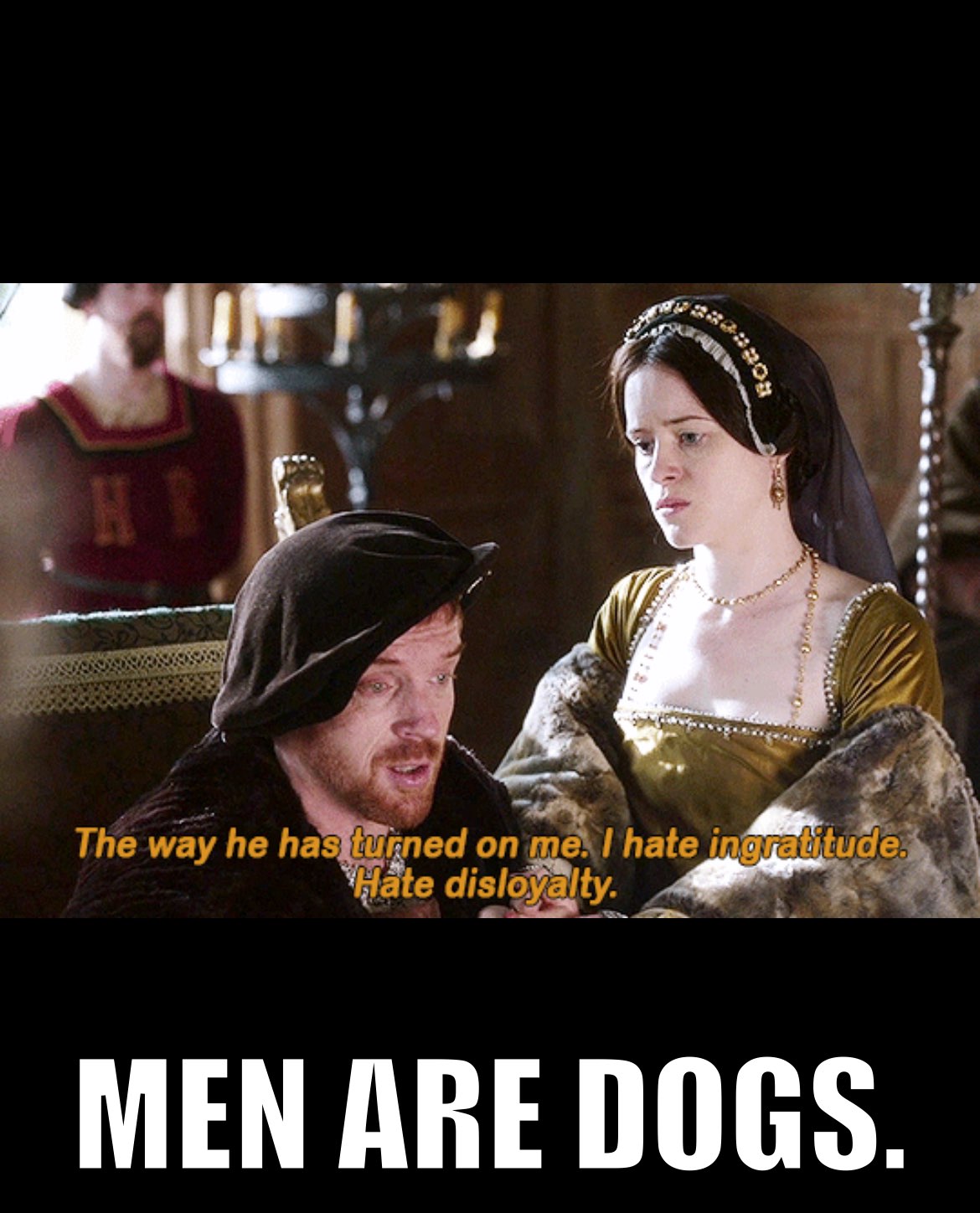
Men are Dogs


Is ‘Gay’ Political?


  Ahead of the 2016 Brexit referendum in the UK, the actor Sir Ian McKellen was interviewed about which way he was planning to vote. The interview’s headline quote was ‘Brexit makes no sense if you’re gay.’ In the piece Sir Ian – who has done an enormous amount to advance fundamental gay rights over the decades – said that, looking at the vote from a gay perspective, ‘there’s only one point, which is to stay. If you’re a gay person, you’re An Internationalist.’40 Presumably people who thought they were gay and thought they’d vote ‘leave’ had been doing it wrong all these years. As so often, far worse wars have been fought on the same terrain in America.


  The date of 21 July 2016 should have been a great moment for supporters of gay rights in the United States. That day Peter Thiel took to the stage of the Republican National Convention in Cleveland, Ohio, and addressed the main hall. A gay man had appeared on a Republican platform before, but not alone and not openly identifying as such. By contrast the co-founder of PayPal, an early investor in Facebook, made a clear and head-on reference to his sexuality as he endorsed Donald Trump as the candidate of the Republican Party for President. During his speech Thiel said, ‘I am proud to be gay. I am proud to be a Republican. But most of all I am proud to be an American.’ All of this was received with huge cheers in the hall. Such a situation would have been unimaginable even a few election cycles before. NBC was among the mainstream media to report all of this in a positive light. ‘Peter Thiel makes history at RNC’ ran the headline.


  The gay press was not so positive. America’s foremost gay magazine, Advocate, attacked Thiel in a long and curious piece consisting of an excommunication from the church of gay. The title read: ‘Peter Thiel Shows Us There’s a Difference between Gay Sex and Gay.’ The sub-banner on the 1,300-word piece by Jim Downs (an associate professor of history at Connecticut College) asked ‘When you abandon numerous aspects of queer identity, are you still LGBT?


  While Downs conceded that Thiel is ‘a man who has sex with other men’, he questioned whether he was in any other way actuallygay’. That question might seem narrow,’ the author admitted. ‘But it is [sic] actually raises a broad and crucial distinction we must make in our notions of sexuality, identity, and community.’ After pooh-poohing those who had hailed Thiel’s speech as any kind of watershed moment – let alone ‘progress’ – Downs pronounced his anathema : ‘Thiel is an example of a man who has sex with other men, but is not a gay man. Because he does not embrace the struggle of people to embrace their distinctive identity.


  Exhibit A for this gay heresy-finder was that in his speech at the RNC Thiel had dismissed the endless high-profile rows about trans bathroom access, who should use which bathrooms and what facilities should be laid on where. Although Thiel had said that he didn’t agree with ‘every plank in our party’s platform’, he did state that ‘fake culture wars only distract us from our economic decline’. As he went on, ‘When I was a kid, the great debate was about how to defeat the Soviet Union. And we won. Now we are told that the great debate is about who gets to use which bathroom. This is a distraction from our real problems. Who cares?This went down very well in Cleveland. And if opinion polls are anything to go by it is a statement that would go down very well across America. It is demonstrably the case that more people are worried about the economy than are worried about bathroom access. But for Advocate this was a deviation too far.


  While reaffirming his own ‘sexual choicesThiel was guilty of ‘separating himself from gay identity’. His opinions on the relative ephemerality to the wider culture of transgender bathroomseffectively rejects the conception of LGBT as a cultural identity that requires political struggle to defend’. Thiel was alleged to be part of a movement which since the 1970s had notinvested in the creation of a cultural identity to the extent that their forebears did’. The success of gay liberation had apparently stopped them doing this ‘cultural work’. But this was dangerous, as the recent massacre at a gay nightclub had shown in some unconnected way. The author left his readers with the powerful reminder that ‘The gay liberation movement has left us a powerful legacy, and protecting that legacy requires understanding the meaning of the term “gay” and not using it simply as a synonym for same-sex desire and intimacy.41


  In fact the massacre at the Pulse nightclub in Orlando in June 2016 had been carried out by a young Muslim who swore allegiance to Islamic State (ISIS). Yet this detail didn’t detain Advocate or the Gay Pride march in New York later the same month. On that occasion the parade led with a huge rainbow banner emblazoned with the words ‘Republican Hate Kills!’, clearly forgetting that Omar Mateen had not been a member of the Republican Party.


  It isn’t just that the self-appointed organizers of the ‘gay communityhave a particular view of politics. They also have a specific view of the alleged responsibilities that being gay brings with it. In 2013 the novelist Bret Easton Ellis was reprimanded and banned from the annual media awards dinner by the gay organization GLAAD. He had been found guilty of tweeting views about the asinine nature of gay television characters that GLAAD said ‘the gay community had responded negatively to’.42 This censorious tone – the prim schoolmaster tone – is the same one Pink News unleashed with a straight face in 2018, with its list of ten ‘dos and don’ts’ for straight people on ‘how they should behave in gay bars’.43 In all of these cases the normal instinct is to say ‘Just who the hell do you think you are?’ But after his reprimand for wrong-think Ellis managed to sum up what had become a whole part of the new gay problem. This was, as he said, that we had come to live in ‘The reign of The Gay Man as Magical Elf, who whenever he comes out appears before us as some kind of saintly E.T. whose sole purpose is to be put in the position of reminding us only about Tolerance and Our Own Prejudices and To Feel Good About Ourselves and to Be a Symbol.


  The reign of the magical gay elf has indeed been settled for the time being as one of the acceptable ways in which society has made its peace with homosexuality. Gays can now marry like everybody else can pretend that they have children in exactly the same way as everybody else, and in general prove – as Dustin Lance Black and Tom Daley do on their YouTube channel – that gays are unthreatening people who actually spend their lives being cute and making cupcakes. As Ellis wrote, ‘The Sweet and Sexually Unthreatening and Super-Successful Gay is supposed to be destined to transform The Hets into noble gay-loving protectors – as long as the gay in question isn’t messy or sexual or difficult.’44 


The former enfant terrible of American fiction had put his finger on something here.


Power vs. Justice

Chomsky-Foucault Debate on Power vs Justice (1971)


A few clips of Noam Chomsky and Michel Foucault discussing justice, power, and the notion of human nature in their famous 1971 debate. This is a version of an upload from the previous channel. The translation is my own, although I referenced the published text (which by the way was edited by Foucault prior to publication, which is why there are various differences between the published transcript and the actual recording). The audio has also been improved. 

The debate was about human nature and took place in November 1971 at the Eindhoven University of Technology, in the Nederlands, as part of the “International Philosophers Project” initiated by the Dutch Broadcasting Foundation and arranged by the Dutch philosopher Fons Elders, who was also the moderator.

Chomsky on the "limits" of knowledge:   

 • Chomsky on the "Limits" of Knowledge ...  

#Philosophy #Chomsky #Foucault


Meaning and Value


Writers can have Faith in Television. There is a lot of Money at stake, after all; and Television owns the best demographers applied Social Science has to offer, and these researchers can determine precisely what Americans in the 1990s are, want, see — what We as Audience want to See Ourselves as

Television, from The Surface on down, is about Desire. And, fiction-wise, Desire is the sugar in Human Food. 

The second Great-seeming thing is that Television looks to be an absolute godsend for a Human-subspecies that loves to Watch People but hates to be watched itself. For the television screen affords access only one-way. A psychic ball-check valve. We can see Them; They can’t see UsWe can relaxunobserved, as we ogle. I happen to believe this is why Television also appeals so much to lonely people. To voluntary shut-ins. 

Every lonely Human I know watches way more than the average U.S. six hours a day. The Lonely, like The Fictive, love one-way Watching

For Lonely People are usually lonely not because of hideous deformity or odour or obnoxiousness — in fact there exist today support - and social groups for persons with precisely these attributes. 

Lonely People tend, rather, to be lonely because they decline to bear the psychic costs of being around other Humans. They are allergic to People. People affect them too strongly.”


The New Critics, rather level-headedly at first, sought to dethrone The Author by attacking what They called “The Intentional Fallacy.” Writers are sometimes wrong about what their texts mean, or sometimes have no idea what they really mean. Sometimes The Text’s meaning even changes for The Writer. It doesn’t matter what The Writer means, basically, for the New Critics; it matters only what The Text saysThis critical overthrow of creative intent set the stage for the poststructural show that opened a couple decades later. The deconstructionists (“deconstructionist” and “poststructuralist” mean the same thing, by the way : “poststructuralist” is what you call a deconstructionist who doesn’t want to be called a deconstructionist), explicitly following Husserl and Brentano and Heidegger the same way the New Critics had co-opted Hegel, see the debate over the ownership of Meaning as a skirmish in larger war in Western philosophy over the idea that presence and unity are ontologically prior to expression. There’s been this longstanding deluded presumptionthey think, that if there is an utterance then there must exist a unified, efficacious presence that causes and owns that utterance. The poststructuralists attack what they see as a post-Platonic prejudice in favour of presence over absence and Speech over Writing. We tend to trust Speech over Writing because of the immediacy of The Speaker: he’s right there, and we can grab him by the lapels and look into his face and figure out just exactly what one single thing he means. But the reason why the poststructuralists are in the literary theory business at all is that they see Writingnot Speech, as more faithful to the metaphysics of true expression. 

For Barthes, Derrida, and Foucault, Writing is a better animal than Speech because it is iterable; it is iterable because it is abstract; and it is abstract because it is a function not of presence but of absence : The Reader’s absent when The Writer’s writing, and The Writer’s absent when The Reader’s reading

For the deconstructionist, then, A Writer’s circumstances and intentions are indeed a part of The “Context” of A Text, but Context imposes no real cinctures on The Text’s Meaning, because Meaning in Language requires cultivation of absence rather than presence, involves not the imposition but the erasure of Consciousness. This is so because these guys — Derrida following Heidegger and Barthes Mallarmé and Foucault God knows who — see literary language as not A Tool but An Environment. A Writer does not wield Language; he is subsumed in it. Language speaks usWriting writes; etc. 

Hix makes little mention of Heidegger’s Poetry, Language, Thought or Derrida’s Margins of Philosophy, where all this stuff is set out most clearly, but he does quote enough Barthes — “To write is… to reach that point where only Language actsperforms,’ and not Me’” — so you get the idea that Author-as-owner is not just superfluous but contradictory, and enough Foucault—“The Writing of our day has freed itself from the necessity of ‘expression’; [it is] an interplay of signs, regulated less by the content it signifies than by the very nature of the signifier” — so you can see that even the New Critics’ Holy Text disappears as the unitary lodestone of Meaning and Value

For Hix’s teachers, trying to attribute Writing’s meaning to a static text or a human author is like trying to knit your own bodyyour own needles. Hix has an even better sartorial image: “PreviouslyThe Text was a cloth to be unraveled by The Reader; if The Cloth were unwound all the way, The Reader would find The Author holding the other end. But Barthes makes The Text Shroud, and no one, not even corpse, is holding the other end.”